

How to Start a Pizza Business: A Complete Beginner's Guide
Everything a beginner needs to plan, cost and launch a pizza business — from choosing your format and target market to startup costs, food-cost maths, equipment, marketing and your first weeks of trading.
In this guide
- 1. Decide what type of pizza business you want
- 2. Choose your target market
- 3. Create your pizza concept
- 4. Learn to make consistent pizza
- 5. Calculate startup costs
- 6. Food costs and profit margins
- 7. Build a profitable menu
- 8. Choose equipment
- 9. Location and delivery strategy
- 10. Branding and marketing
- 11. Legal and food-safety requirements
- 12. Launch strategy
- 13. Common mistakes
- FAQ
Pizza is one of the most forgiving businesses to enter and one of the least forgiving to run badly. Ingredient costs are low, demand is constant and the product travels well — but margins disappear fast when pricing is guessed, the menu is bloated or the dough behaves differently every day. This guide walks through how to start a pizza business step by step, in the order the decisions actually arrive.
If you have not yet learned to produce the same excellent pizza consistently, start there. The Secrets of Pizza Guide covers the dough, biga, fermentation and baking fundamentals that everything below is built on top of.
1. Decide what type of pizza business you want
Your format decides your startup costs, your staffing, your rent and your daily rhythm. Pick it before anything else — the same recipe can support very different businesses.
- Small pizzeria — sit-down service, highest fit-out cost, strongest brand presence and best average ticket.
- Pizza delivery — lower rent, kitchen-only space, but platform commissions, drivers and packaging eat into margin.
- Takeaway — fast throughput and small footprint; works where there is steady evening foot traffic.
- Pizza by the slice — high-volume daytime model for stations, shopping streets and student areas.
- Food truck / mobile pizza — flexible and comparatively cheap to start; income depends on pitches and weather.
- Catering — weddings, parties and corporate events; fewer, larger jobs and predictable prep.
- Ghost kitchen — delivery only from a shared or rented kitchen; the cheapest way to test a concept before signing a long lease.
Most successful pizza business ideas start narrow. One format, one small area, one style done extremely well — then expand.
2. Choose your target market
Who you serve changes your menu, your prices and your opening hours far more than your logo does.
- Local customers — repeat trade within walking or short driving distance; consistency and speed matter most.
- Families — larger orders, value bundles, early evening peaks, kid-friendly options.
- Students — price sensitive, late hours, high volume, strong response to offers and social media.
- Workers — weekday lunch, slices and quick service, tight speed requirements.
- Events and catering clients — booked in advance, higher ticket, mobile setup.
- Premium pizza customers — willing to pay for Neapolitan technique, imported flour, San Marzano tomatoes and fior di latte.
3. Create your pizza concept
Your concept is the promise the customer can describe in one sentence. Define it on paper before you spend anything.
Pizza style
Neapolitan, Roman, contemporary Italian, New York or pan pizza — each implies a different oven, dough process and bake time. Choose one as your identity.
Menu, signature pizzas and ingredients
Six to ten pizzas is plenty at launch, with two or three signature pizzas that only you sell. Decide which ingredients are premium and non-negotiable, and where a good-value supplier is fine.
Portion sizes and pricing
Fix dough ball weight, sauce and cheese grammage and topping weights in writing. Fixed portions are what make both your quality and your food cost predictable, and they are the basis of every price you set.
4. Learn to make consistent pizza
This is the foundation everything else rests on. In a commercial setting you are not making one good pizza — you are making the same pizza two hundred times, on a hot Friday, with orders queued and a dough that reacts to the temperature of the room.
- Dough: hydration, flour strength and mixing determine whether your bases are workable at peak service.
- Fermentation: a controlled biga or cold ferment gives you flavour, digestibility and a predictable schedule you can staff around.
- Baking: oven temperature, floor management and bake time decide crust structure and how the pizza survives the box.
- Consistency: written recipes, weighed ingredients and timed processes turn skill into a system your staff can repeat.
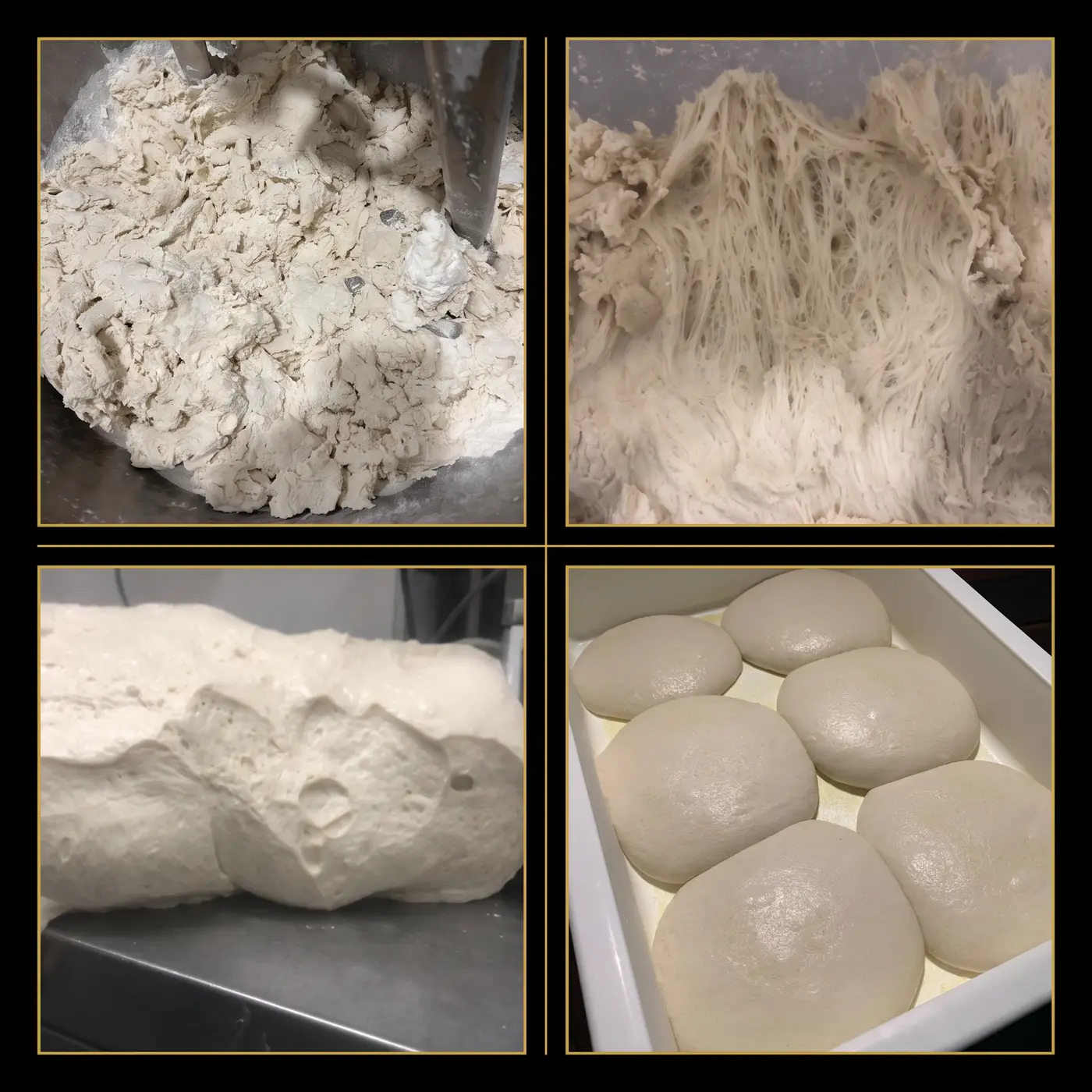
Before investing in equipment and opening your doors, learn the fundamentals of professional pizza making with the Secrets of Pizza Guide.
Get the Secrets of Pizza Guide5. Calculate startup costs
Pizza shop startup costs differ hugely between a food truck and a fitted pizzeria, so ignore generic numbers online and build your own list from real local quotes. Price every line below, then add a contingency.
- Oven — wood-fired, gas or electric deck; usually your single biggest purchase.
- Dough mixer — spiral mixer sized to your daily dough volume.
- Refrigeration and freezer — including space for cold fermentation.
- Prep equipment — scales, dough boxes, peels, pans, containers, utensils.
- Work tables — stainless steel prep and dough benches.
- Packaging — boxes, liners, bags, labels, tape.
- POS and payment system — till, card terminal, online ordering integration.
- Rent and deposit — usually several months paid up front.
- Licences and permits — registration, food-safety approvals, signage, extraction.
- Initial ingredients — opening stock of flour, tomatoes, cheese, oil and toppings.
- Marketing — signage, photography, launch promotions, printed material.
- Emergency and working capital — enough to cover several months of fixed costs while sales build.
Working capital is the line beginners cut first and regret most. A pizza business plan that assumes full sales from week one is not a plan.
6. Calculate food costs and profit margins
Pizza business profit is decided by arithmetic, not enthusiasm. Work out these numbers per pizza and per month, and review them whenever supplier prices move.
- Cost per pizza — weigh dough, sauce, cheese and toppings, then price each gram from your invoices.
- Food cost percentage — ingredient cost divided by selling price; set a target and monitor it weekly.
- Labour — your own hours included; unpaid founder labour hides an unprofitable model.
- Packaging — boxes and bags per order, especially for delivery-heavy models.
- Rent — as a percentage of expected monthly sales, not as an absolute you hope to cover.
- Utilities — ovens and refrigeration are the heaviest energy users in the building.
- Delivery costs — drivers, vehicles or platform commissions, which can take a large share of each order.
- Marketing — treat it as a recurring monthly cost, not a one-off launch expense.
- Profit per pizza — what remains after all of the above; if it is thin, fix pricing or portions before scaling.
7. Build a profitable menu
A huge menu feels generous and quietly destroys new businesses. Every extra item adds stock, waste, prep time, staff training and mistakes during service.
- Keep the launch menu short and built mostly from shared ingredients.
- Favour items with a strong margin and a fast, repeatable build.
- Add a small number of high-margin extras: drinks, one dessert, one or two sides.
- Drop anything that sells poorly after a month — data, not attachment.
8. Choose equipment
Buy what you cannot trade without, and postpone the rest until volume proves you need it.
Essential from day one
- An oven matched to your pizza style and target output.
- A mixer that can handle your peak daily dough volume.
- Refrigeration for fermentation and toppings.
- Prep bench, scales, dough boxes and peels.
- Packaging and a working POS with card payments.
Can wait until you grow
- A second oven or additional deck.
- Display cabinets and extra front-of-house fit-out.
- Dough sheeters, large-capacity prep machines and specialty gadgets.
- Owned delivery vehicles instead of platforms or contractors.
Good used pizza shop equipment from a reputable dealer is often the smartest use of limited capital.
9. Location and delivery strategy
For a takeaway or pizzeria, location is a large part of the business model. For delivery and ghost kitchens, your delivery radius plays the same role.
- Foot traffic — count people at the times you actually plan to trade, not at midday on a Saturday only.
- Delivery radius — keep it tight enough that pizza arrives hot; quality falls off with distance.
- Local competition — study their style, prices and reviews, then position yourself clearly against them.
- Online ordering — your own ordering page protects margin; platforms buy reach at a commission.
10. Branding and marketing
Pizza is visual and local, which makes marketing unusually cheap if you do it consistently.
- Instagram — behind-the-scenes dough work, oven shots, daily specials.
- TikTok — short process videos; stretching, topping and baking perform extremely well.
- Google Business Profile — complete it fully with hours, photos, menu and ordering link.
- Local SEO — location keywords on your site, consistent name, address and phone details everywhere.
- Promotions — opening offers, family bundles, lunch deals and loyalty cards.
- Customer reviews — ask every happy customer; reviews are the strongest local ranking and trust signal.
- Food photography — a handful of excellent photos beats hundreds of bad ones on every channel.
11. Legal and food-safety requirements
Rules differ by country, region and even by municipality, so treat this as a checklist to confirm locally rather than a definitive list. Before opening, check business registration, food business licensing, food-safety and HACCP training, premises inspection, extraction and fire safety, waste handling, allergen labelling, employment rules and tax registration with your local authority. Confirm everything in writing before you spend money on a site.
12. Launch strategy for your first few weeks
A calm, sequenced launch beats a loud one. A simple plan for the first weeks:
- Test recipes until the same dough and bake are repeatable on different days.
- Calculate costs for every item on paper before printing a menu.
- Test the menu with friends, family and neighbours under timed conditions.
- Get feedback on crust, seasoning, portion size and price perception.
- Build a social media presence weeks before opening so day one has an audience.
- Soft launch with limited hours and a limited menu to protect quality.
- Collect reviews from the first customers while goodwill is highest.
- Improve based on customer feedback, then widen hours and menu gradually.
13. Common mistakes when starting a pizza business
- Underpricing to compete, leaving no margin to survive quiet weeks.
- An oversized menu that slows service and multiplies waste.
- Poor food-cost calculations based on guesses instead of invoices.
- Inconsistent dough, which erodes repeat custom faster than anything else.
- Buying too much equipment too early and running out of working capital.
- Ignoring marketing and waiting for foot traffic to appear on its own.
- Not tracking expenses, so problems are discovered months too late.
More pizza guides
Before you write a business plan, master the product itself. These guides cover the fundamentals your pizzeria will be built on:
- How to Make Neapolitan Pizza Dough — the step-by-step biga fermentation method professional dough is built on.
- What Is Neapolitan Pizza? — the style, standards and ingredients that define authentic pizza napoletana.
- Neapolitan Pizza in a Home Oven — how to get pizzeria results without a commercial oven.
The single hardest part of starting a pizza business is making the same excellent pizza every time. The Secrets of Pizza Guide gets you there.
Get the Secrets of Pizza GuideFrequently asked questions
How much does it cost to start a pizza business?
Pizza shop startup costs vary enormously by country, format and whether you buy new or used equipment. A mobile or ghost-kitchen setup is usually the cheapest entry point, a small takeaway sits in the middle, and a full pizzeria with a dedicated oven, fit-out and rent deposit is the most expensive. Build your own figure from real local quotes for oven, mixer, refrigeration, prep, packaging, POS, rent deposit, licences, opening stock, marketing and at least a few months of working capital.
Is a pizza business profitable?
Pizza can be one of the better margin items in food service because the raw ingredient cost per pizza is low relative to the selling price. Pizza business profit depends far more on discipline than on recipes: accurate food cost percentage, sensible pricing, labour control, low waste and consistent quality that brings customers back.
Do I need experience to open a pizza shop?
You do not need years in a restaurant, but you do need to be able to produce the same pizza reliably, hour after hour, under pressure. Most beginners underestimate dough and fermentation. Learning the fundamentals properly before you sign a lease is the cheapest step you will ever take.
What equipment do I need to start a pizzaiolo business?
Essentials are an oven suited to your pizza style, a dough mixer, refrigeration for cold fermentation and toppings, a prep fridge or work table, dough boxes, scales, and packaging. Extras such as a second oven, display units, a dough sheeter or delivery vehicles can wait until volume justifies them.
What licences do I need to open a pizza shop?
Requirements differ by country, region and even municipality. Typically you will need business registration, a food business registration or licence, food-safety or HACCP training, premises approval and possibly waste, extraction and signage permissions. Always confirm the exact list with your local authority before committing money.
How do I price my pizzas?
Start from your true cost per pizza, including dough, toppings, packaging and a share of labour, rent and utilities. Set a target food cost percentage, then check the resulting price against local competitors and your positioning. Underpricing is the most common and most damaging beginner mistake.
Ready to take the next step?
Start by mastering the pizza fundamentals with the Secrets of Pizza Guide, then use what you learn to build your own pizza business.
Get the Secrets of Pizza GuideThis article is general information, not legal, tax or financial advice. Costs, licences and food-safety rules vary by country and location — always confirm requirements with your local authorities.