
How to Make Neapolitan Pizza Dough
Four ingredients, one long fermentation, and a handful of habits that separate a soft, airy Neapolitan base from a dense disc of bread. Here is the method, step by step.
In this guide
1. Ingredients and ratios
Neapolitan dough is flour, water, salt and yeast. Nothing else — no oil, no sugar, no milk. Because there is nowhere to hide, the ratios and the flour quality do all the work. Weigh everything; cups will not give you a repeatable dough.
| Type 00 flour | 1000 g |
|---|---|
| Water | 600–620 g (60–62%) |
| Fine sea salt | 25–28 g |
| Fresh yeast | 1–2 g (0.3–0.6 g dry) |
That makes roughly six to seven 250 g dough balls. Yeast is deliberately tiny: fermentation should be slow, driven by time rather than by a large dose of yeast.
2. Mixing and kneading
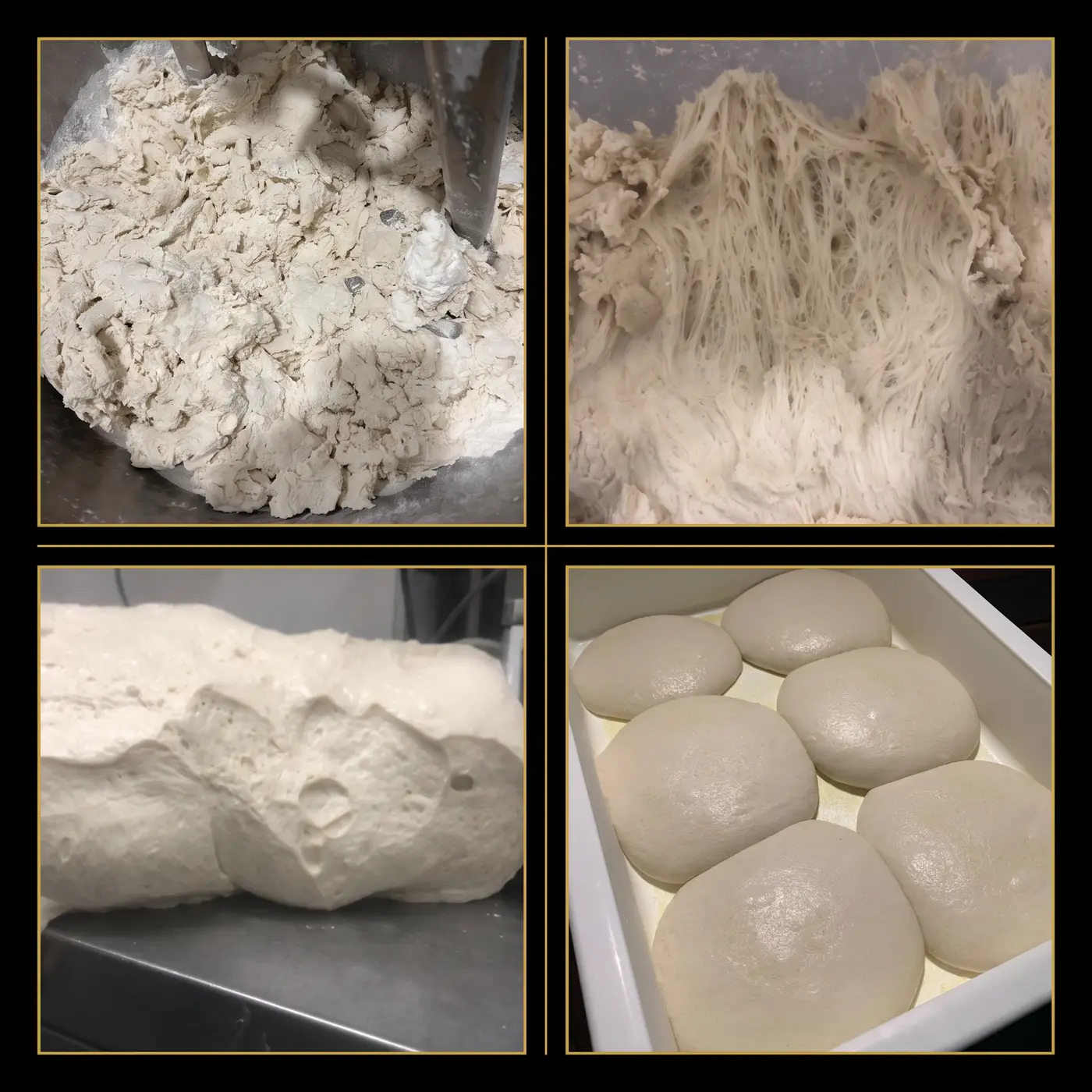
- Dissolve the salt in most of the water, then add about a third of the flour and mix to a smooth slurry.
- Add the yeast, then the remaining flour gradually until the dough comes together as a shaggy mass.
- Rest 15–20 minutes so the flour hydrates fully — this alone does much of the kneading for you.
- Knead 10–15 minutes by hand, or 8–10 minutes on low speed in a spiral mixer, until smooth and elastic.
- The dough is ready when a small piece stretches thin enough to see light through it without tearing.
3. Biga and fermentation
Fermentation is where flavour is made. The simplest route is a bulk rest of 2 hours at room temperature followed by 24–48 hours in the fridge. The more rewarding route is a biga: a stiff preferment of flour, water and a pinch of yeast, matured for 16–18 hours before it is mixed into the final dough.
- Biga gives a deeper aroma, a more open crumb and a crust that stays light rather than chewy.
- Cold fermentation slows the yeast so flavour compounds develop without the dough over-proofing.
- Always let cold dough come back towards room temperature before shaping — cold dough tears.
- Watch the dough, not the clock: room temperature changes everything about timing.
The full biga fermentation method — exact schedules, temperatures and ratios used in Caserta — is laid out step by step in the Secrets of Pizza Guide.
Get the Secrets of Pizza Guide4. Balling and final proof
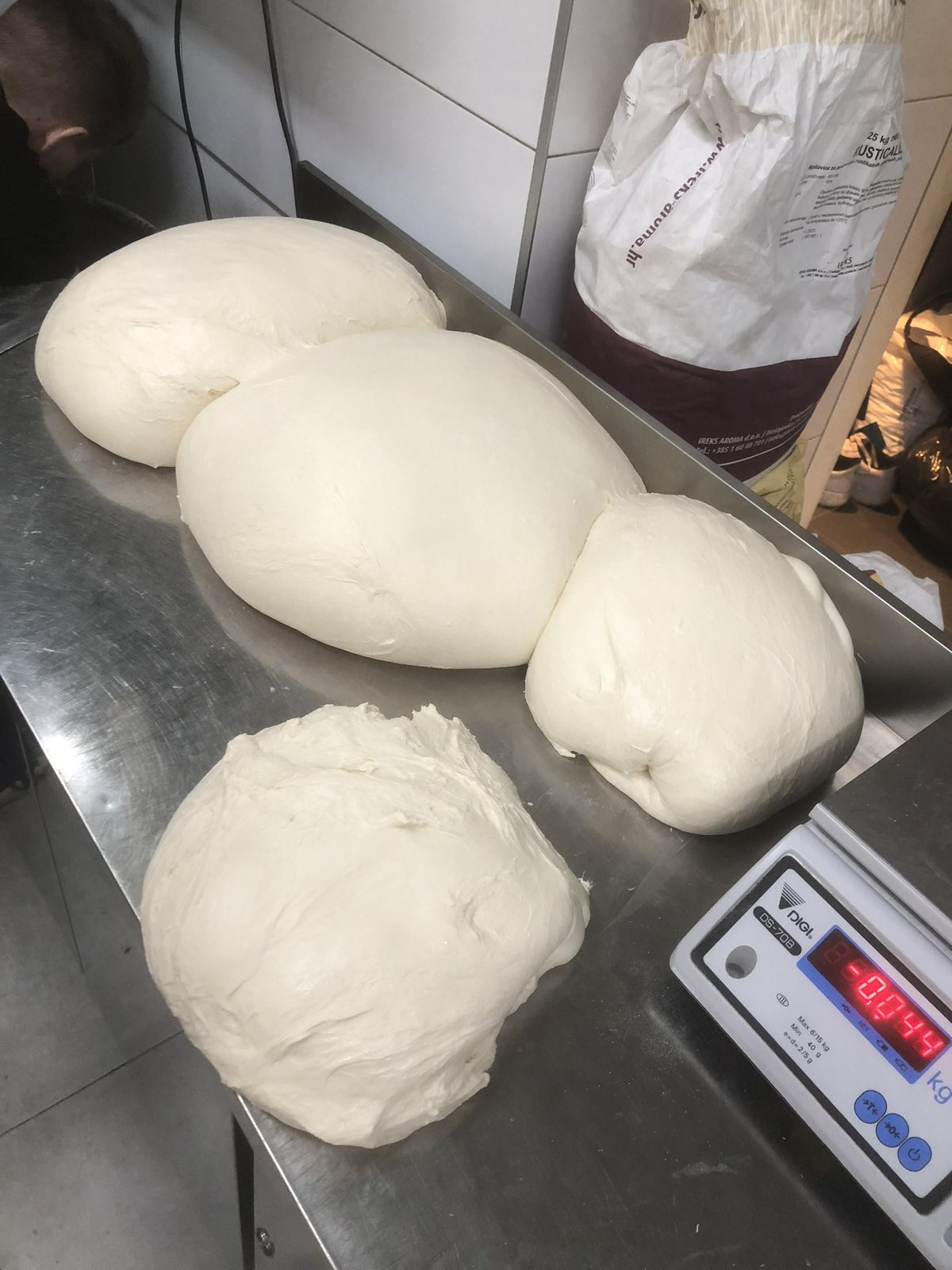
Divide the dough into 250–280 g pieces and shape each into a tight, smooth ball with no seams on top. Place them in a covered dough box with a little space between them and let them proof 4–6 hours at room temperature, until soft, domed and slightly jiggly.
5. Stretching by hand
- Flour the bench lightly with semola or 00 and lift the ball out without deflating it.
- Press from the centre outwards with your fingertips, pushing the gas into the outer rim.
- Leave a 1.5–2 cm untouched border — that becomes the cornicione.
- Stretch the base to 28–32 cm by rotating and letting gravity do the work.
- No rolling pin, ever: it flattens the bubbles you spent two days building.
6. Baking
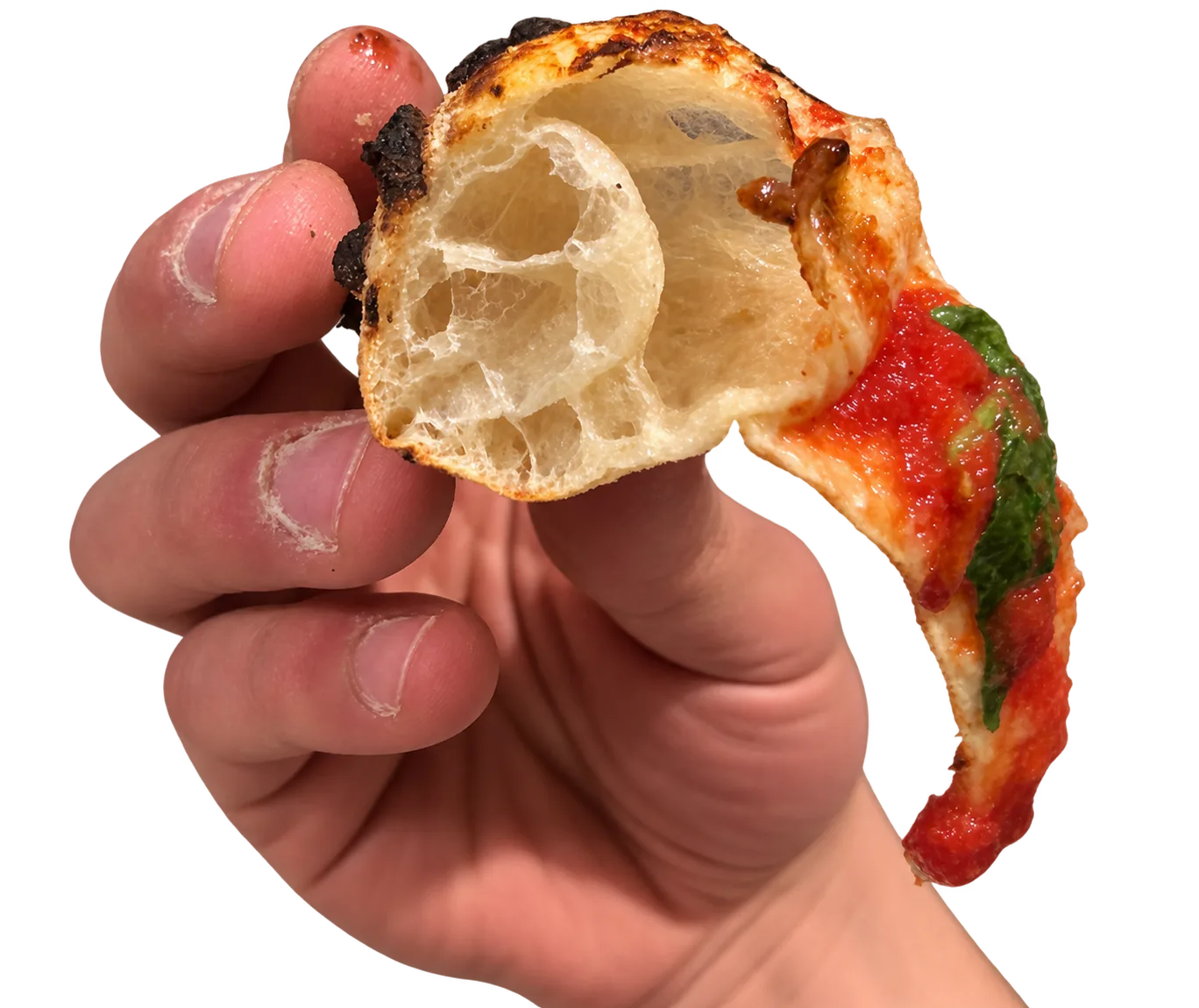
Neapolitan pizza is a fast bake. In a wood-fired or pizza oven at 430–480 °C, it takes 60–90 seconds and produces the leopard-spotted crust. In a home oven, preheat a steel or stone at maximum for 45–60 minutes and bake on the top shelf; expect 4–6 minutes and a slightly less charred, still excellent result.
7. Troubleshooting
Dough springs back and will not stretch
Under-proofed or too cold. Give it more time at room temperature before shaping.
Flat base with no puffed rim
Over-proofed dough, gas pressed out of the border, or an oven that is not hot enough at the top to set the rim quickly.
Tough, bready crust
Usually a weak fermentation or a flour that is not suited to a fast, hot bake. Extend the cold ferment and use a proper 00 pizza flour.
Soggy centre
Too much sauce or wet mozzarella. Drain the cheese and keep the sauce thin and sparing.
Frequently asked questions
What flour is best for Neapolitan pizza dough?
A finely milled Italian type 00 flour with a W value around 260–320 is the standard choice. It absorbs water well, tolerates long fermentation and produces a soft, extensible dough that opens by hand. Strong bread flour can work, but it usually bakes tougher and less tender at Neapolitan bake times.
What hydration should Neapolitan pizza dough be?
Traditional Neapolitan dough sits between 58% and 65% hydration. Beginners are more successful nearer 60–62%: the dough is easier to handle and shape, and still bakes with an open, airy rim. Higher hydration gives a lighter crumb but demands better handling and a hotter oven.
How long should Neapolitan pizza dough ferment?
Give it time. A room-temperature ferment of 8–12 hours works, but 24–48 hours with a cold retard in the fridge develops far more flavour and makes the dough easier to digest. A biga preferment pushes the aroma and crumb structure further again.
Do I need a mixer to make Neapolitan pizza dough?
No. Hand mixing with rests, or a slap-and-fold technique, develops gluten perfectly well for home batches. A spiral mixer only becomes necessary once you make dough in volume day after day.
Can I use a rolling pin on Neapolitan dough?
Never. A rolling pin crushes the gas bubbles that create the puffed cornicione. Always press and stretch the dough by hand from the centre outwards, leaving the outer rim untouched.
Why is my Neapolitan dough tearing when I stretch it?
Usually the dough is under-fermented, too cold, or not rested long enough after balling. Let the dough balls come close to room temperature and relax fully, and handle them gently — extensibility comes from time, not force.
Want the full method?
The Secrets of Pizza Guide walks through the biga fermentation method with exact timings, photos and the baking technique behind every pizza on this site.
Get the Secrets of Pizza Guide