What Is Neapolitan Pizza?
Soft, blistered, eaten within minutes of leaving a blazing oven — Neapolitan pizza is the original, and everything else is a variation. Here is what actually defines it.
In this guide
1. The definition
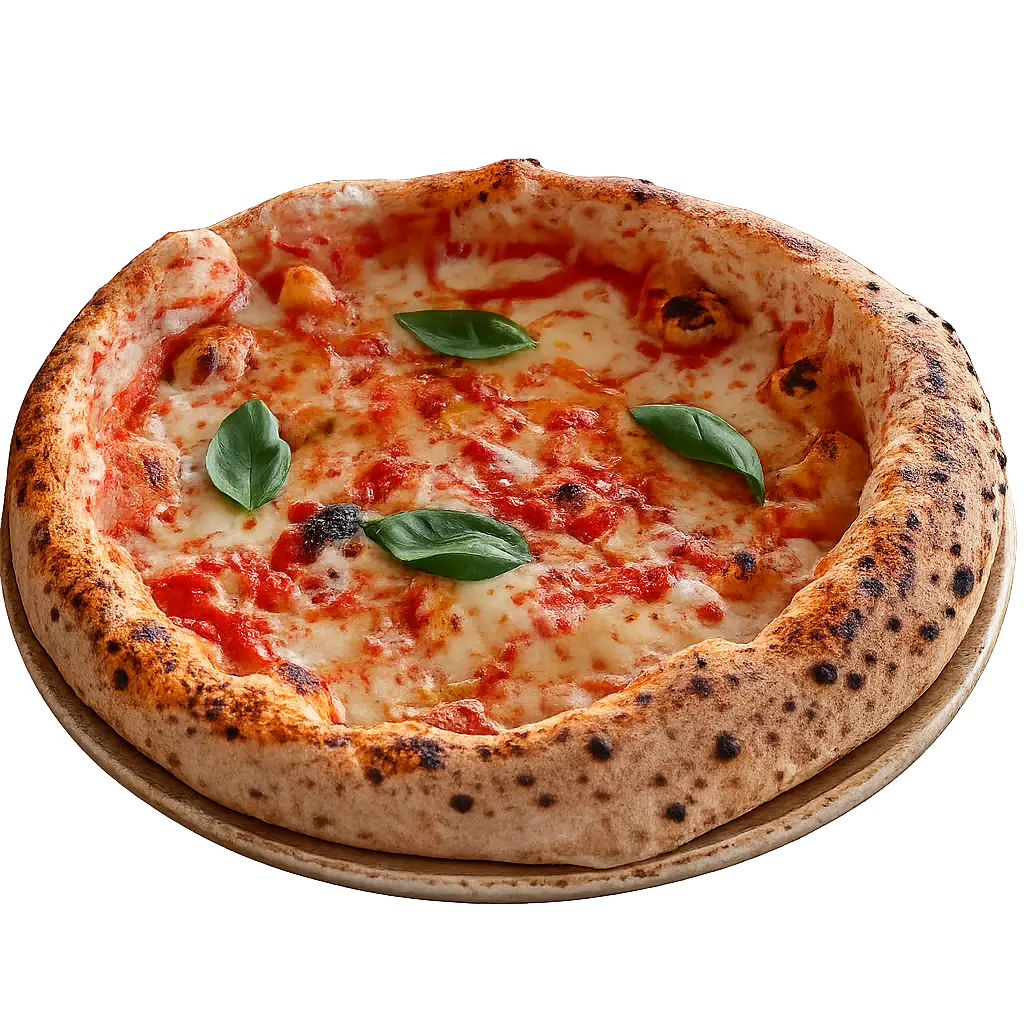
Neapolitan pizza — pizza napoletana — is the original pizza, born in Naples. It is a round pizza of about 28–32 cm with a thin, soft centre and a raised, airy rim called the cornicione. The dough contains only flour, water, salt and yeast. It is never rolled, always stretched by hand, and it bakes in 60–90 seconds in a wood-fired oven at 430–480 °C.
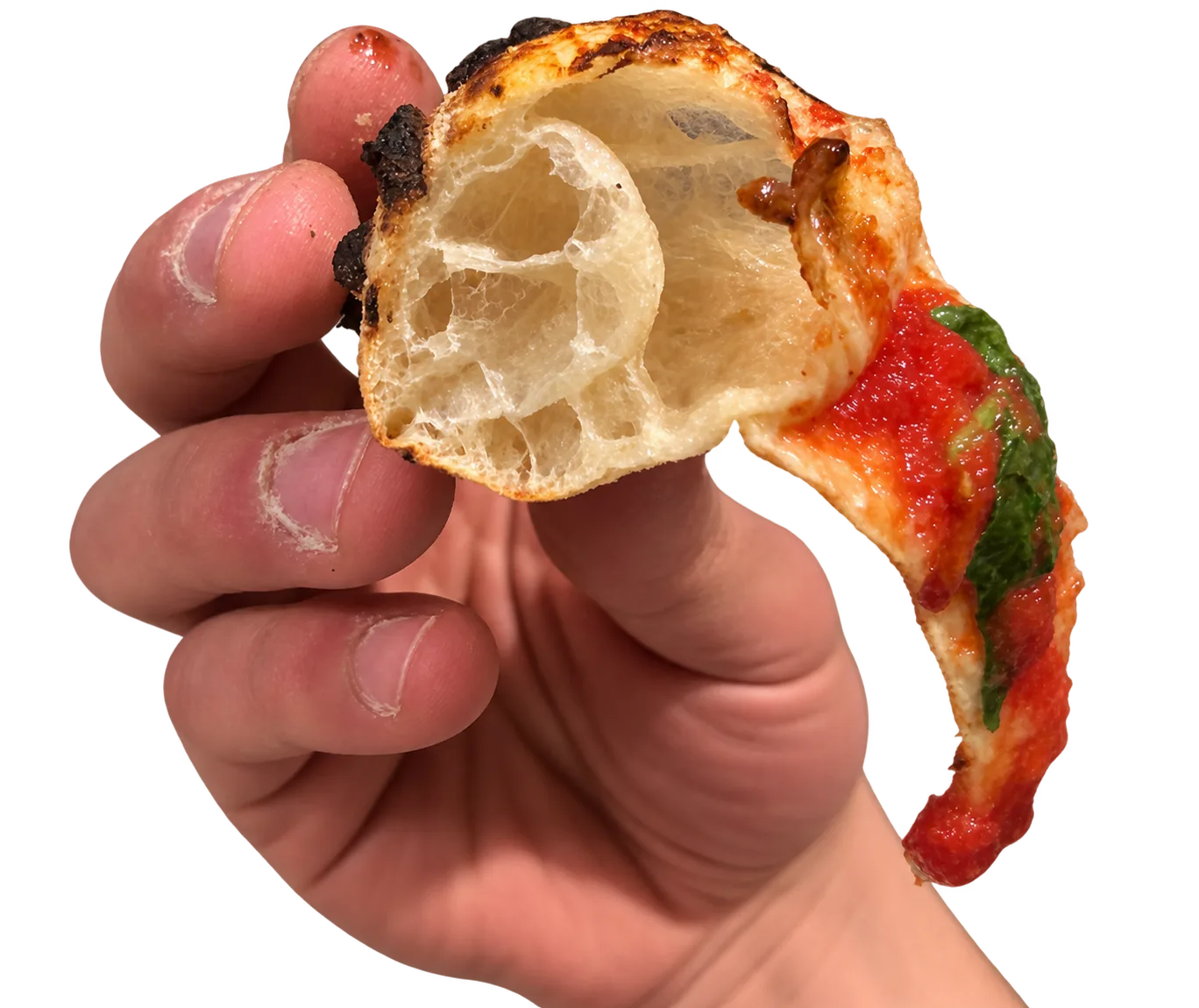
The result is a pizza that is soft and foldable rather than crisp, with a moist centre and a rim full of large air bubbles and charred "leopard spots". The classic versions are the Margherita — San Marzano tomato, fior di latte or buffalo mozzarella, basil, olive oil — and the Marinara — tomato, garlic, oregano, olive oil, no cheese.
2. A short history
Flatbreads with toppings have fed Naples for centuries, but the modern pizza took shape in the 18th and 19th centuries as street food for the city's working poor. The Margherita legend dates to 1889, when pizzaiolo Raffaele Esposito is said to have presented Queen Margherita of Savoy with a pizza in the colours of the Italian flag — tomato, mozzarella, basil.
In 2017, UNESCO added the art of the Neapolitan pizzaiolo to its list of intangible cultural heritage — recognition that this is a craft of gestures and fermentation, not just a recipe.
3. The official rules
Pizza Napoletana carries EU Traditional Speciality Guaranteed status, and the Associazione Verace Pizza Napoletana (AVPN) publishes the official discipline. Its core rules:
- Dough of 00 flour, water, salt and yeast only — no oil, no sugar.
- Hand-stretched only; rolling pins are forbidden.
- Diameter 28–32 cm, with a raised rim of 1–2 cm.
- Baked on the stone floor of a wood-fired oven at 430–480 °C for 60–90 seconds.
- Toppings limited to approved ingredients — San Marzano tomatoes DOP, mozzarella di bufala or fior di latte, fresh basil, extra-virgin olive oil.
4. How it differs from other pizzas
- New York style: oil in the dough, lower temperature, longer bake — crisp enough to fold and hold.
- Roman pizza al taglio: high hydration, baked in trays, crisp and airy, sold by the slice.
- Detroit / Sicilian: thick pan pizzas with long bakes and caramelised cheese edges.
- Neapolitan: the softest and fastest of them all — 90 seconds, knife-and-fork tender, eaten immediately.
Frequently asked questions
What makes a pizza Neapolitan?
A Neapolitan pizza has a soft, thin centre and a puffed, airy rim (cornicione), made from a lean dough of 00 flour, water, salt and yeast, fermented slowly and baked in 60–90 seconds at 430–480 °C. Toppings are minimal — San Marzano tomatoes, fior di latte or mozzarella di bufala, fresh basil and olive oil.
What is the difference between Neapolitan pizza and regular pizza?
Neapolitan pizza is softer, wetter in the centre and baked far hotter and faster than most other styles. New York or pan pizzas use oil in the dough, lower oven temperatures and longer bakes, giving a crisper, firmer base you can fold or hold rigid. Neapolitan pizza is eaten with a knife and fork as often as by hand.
Is Neapolitan pizza protected by law?
Yes. Pizza Napoletana holds Traditional Speciality Guaranteed (TSG) status in the EU, and the Associazione Verace Pizza Napoletana (AVPN) certifies pizzerias that follow the official rules on ingredients, dough handling and baking. The art of the Neapolitan pizzaiolo is also on UNESCO's list of intangible cultural heritage.
Why is Neapolitan pizza crust leopard-spotted?
The charred spots come from a long, slow fermentation combined with a very hot, fast bake. Fermentation develops sugars in the dough, and at 430–480 °C those sugars caramelise and blister in seconds — the signature 'leopard spotting' on the rim.
Can you make real Neapolitan pizza at home?
Yes, with the right dough method. A home oven cannot reach 450 °C, but a properly fermented biga dough baked on a preheated steel or stone at maximum temperature gets remarkably close — soft centre, open crumb and a puffed rim.
Make it yourself
The Secrets of Pizza Guide teaches the authentic Neapolitan method from Caserta — biga fermentation, hand-stretching and baking — step by step.
Get the Secrets of Pizza Guide