
Neapolitan Pizza in a Home Oven
No wood-fired oven, no 450 °C dome — and still a soft, blistered, leopard-spotted pizza. Here is how to make a regular kitchen oven do the job.
In this guide
1. Is it really possible?
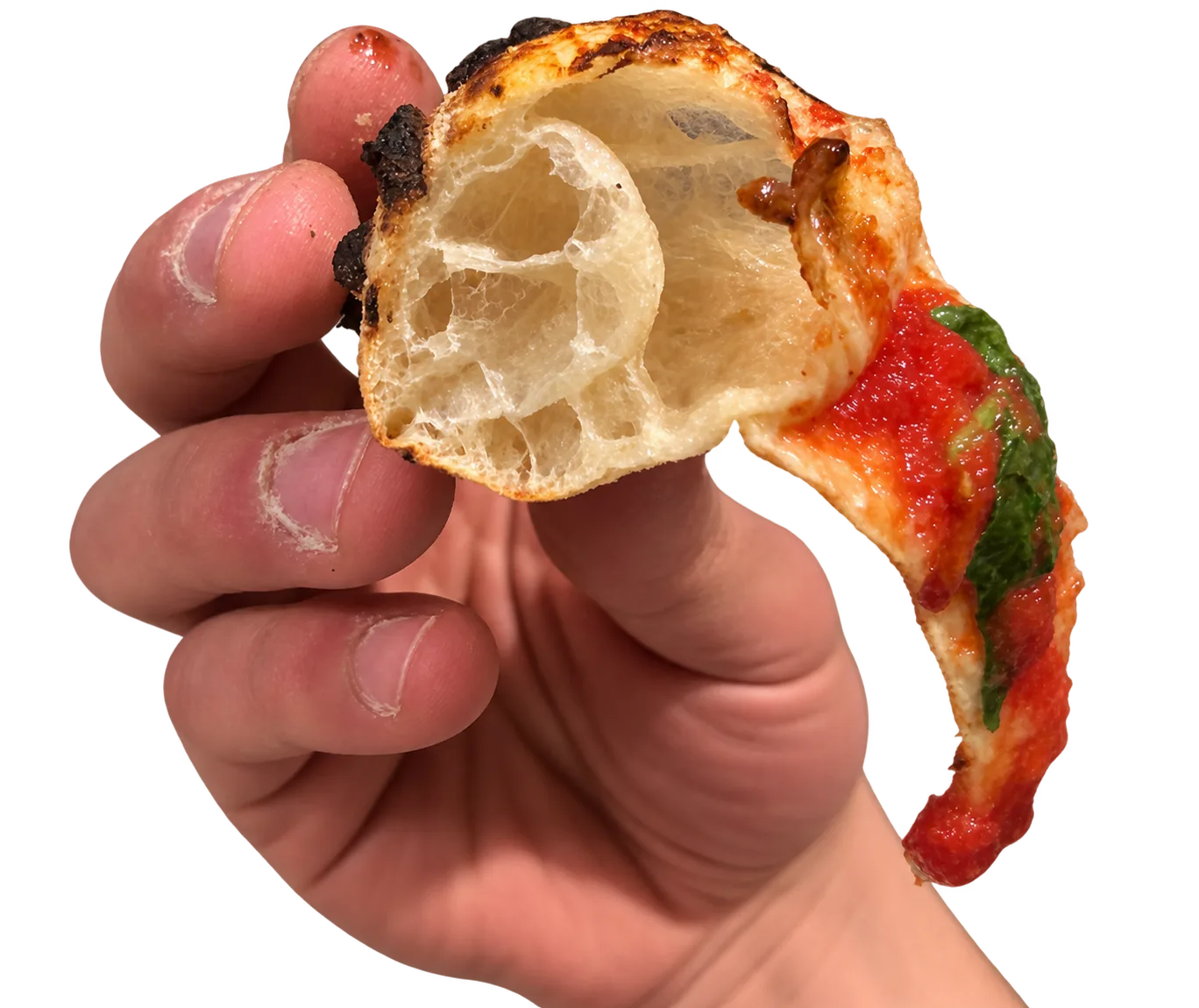
Yes — with honest expectations. A wood-fired oven bakes Neapolitan pizza in 60–90 seconds at 430–480 °C. A home oven tops out near 250–275 °C, so the bake stretches to 4–6 minutes. The dough, the fermentation and the setup are what close the gap: get those right and the result is a soft centre, an open, airy rim and real blistering — a pizza most people could not tell apart from a pizzeria's.
2. Steel, stone and setup
- A baking steel is the single best upgrade: it conducts heat far faster than a stone and gives strong oven spring at home-oven temperatures.
- A cordierite pizza stone is a good second choice — preheat it longer, at least 60 minutes.
- Place the steel or stone on the top rack, 10–15 cm from the upper heating element.
- Preheat at maximum temperature for 45–60 minutes. Most home-oven failures are preheat failures.
- Use the broiler (grill) for the final 10 minutes of preheating to charge the steel with top heat, then switch back to conventional top-and-bottom heat before baking.
3. The home-oven bake
- Launch the pizza onto the steel and close the door immediately — every open second dumps heat.
- Bake 4–6 minutes, watching for the rim to puff and spot. Rotate once at the halfway mark if your oven bakes unevenly.
- For extra blistering, switch to the broiler for the last 30–60 seconds — and do not walk away.
- Let the steel recover 3–5 minutes between pizzas.
4. Dough adjustments
The same biga-fermented dough works in a home oven, with small adjustments for the longer bake:
- Ferment on the longer side — 36–48 hours — so enough sugars develop for browning at lower temperatures.
- Stretch the centre slightly thicker than you would for a wood-fired oven; it keeps the base moist over 5 minutes instead of drying out.
- Keep the sauce thin and the mozzarella well drained — a longer bake steams wet toppings instead of drying them.
5. Common mistakes
Baking on a bare oven rack or tray
The base never gets enough bottom heat. Always use a preheated steel or stone.
Not preheating long enough
The oven air reaches temperature in 15 minutes; the steel needs 45–60. An underheated steel means a pale, flat pizza.
Overloading toppings
At home-oven temperatures, heavy toppings release water and cool the pizza faster than it bakes. Less is more.
Expecting 90-second results from a 5-minute bake
The crust chars differently — more even browning, fewer dramatic spots — but the flavour and texture of a properly fermented dough still come through.
Frequently asked questions
Can you make Neapolitan pizza in a regular oven?
Yes. A home oven cannot reach the 430–480 °C of a wood-fired oven, but a preheated baking steel or stone at your oven's maximum temperature, combined with a well-fermented dough, produces a soft-centred pizza with a puffed, blistered rim that is genuinely close to the original.
Steel or stone — which is better for Neapolitan pizza?
A baking steel. Steel conducts heat roughly 18 times faster than cordierite stone, so it transfers energy into the base quickly in a cooler oven. A stone still works well; it just needs a longer preheat and gives slightly less spring.
Should I use the broiler (grill) for pizza?
Yes, with care. Preheat the steel with the broiler on high for the last 10 minutes, then switch to top-and-bottom heat at maximum before launching. This loads the steel with extra top heat and helps blister the rim. Watch the first bake closely.
How long does Neapolitan pizza take in a home oven?
Expect 4–6 minutes at 250–275 °C on a fully preheated steel, versus 60–90 seconds in a wood-fired oven. The dough should be fermented long enough to brown well in that longer window.
Do I need to change the dough for a home oven?
Keep the same dough, but ferment it a little longer so there are enough sugars for browning, and stretch the base slightly thicker in the centre so it stays moist during the longer bake. Full timings are in the Secrets of Pizza Guide.
Get the exact home-oven method
The Secrets of Pizza Guide includes the complete home-oven chapter — preheat schedules, broiler timing and the biga dough tuned for a domestic oven.
Get the Secrets of Pizza Guide