
Pizza Dough Hydration
Hydration is the most talked-about number in pizza — and the most misunderstood. Here is what it means and how to use it.
In this guide
1. What hydration means
Hydration is simply how much water is in the dough compared with the flour. Bakers express it as a percentage of the flour weight. If you use 1,000 g of flour and 650 g of water, the dough is 65% hydration. If you use 700 g of water, it is 70%.
It is always calculated against the flour, never against the total dough. That makes hydration easy to compare between recipes of different sizes. It also means that a few percentage points represent a meaningful change in how the dough behaves.
Hydration is only one number, but it influences almost everything else: how sticky the dough feels, how fast it ferments, how easily it stretches, how the rim rises and how the crust bakes. It is worth understanding before changing any other variable.
2. 60%, 65% and 70% in plain language
Around 60% — firm and easy
The dough feels smooth, a little firm and not sticky. It is very easy to ball and stretch, even for beginners. It bakes with a tender but tighter crumb. Traditional Neapolitan doughs in hot wood-fired ovens often live near here.
Around 65% — the balanced middle
Soft and slightly tacky, but still easy to handle with a little flour on the bench. Stretches well, gives a lighter rim and holds up to longer bakes. For many home cooks, this is the most forgiving starting point.
Around 70% — soft and open
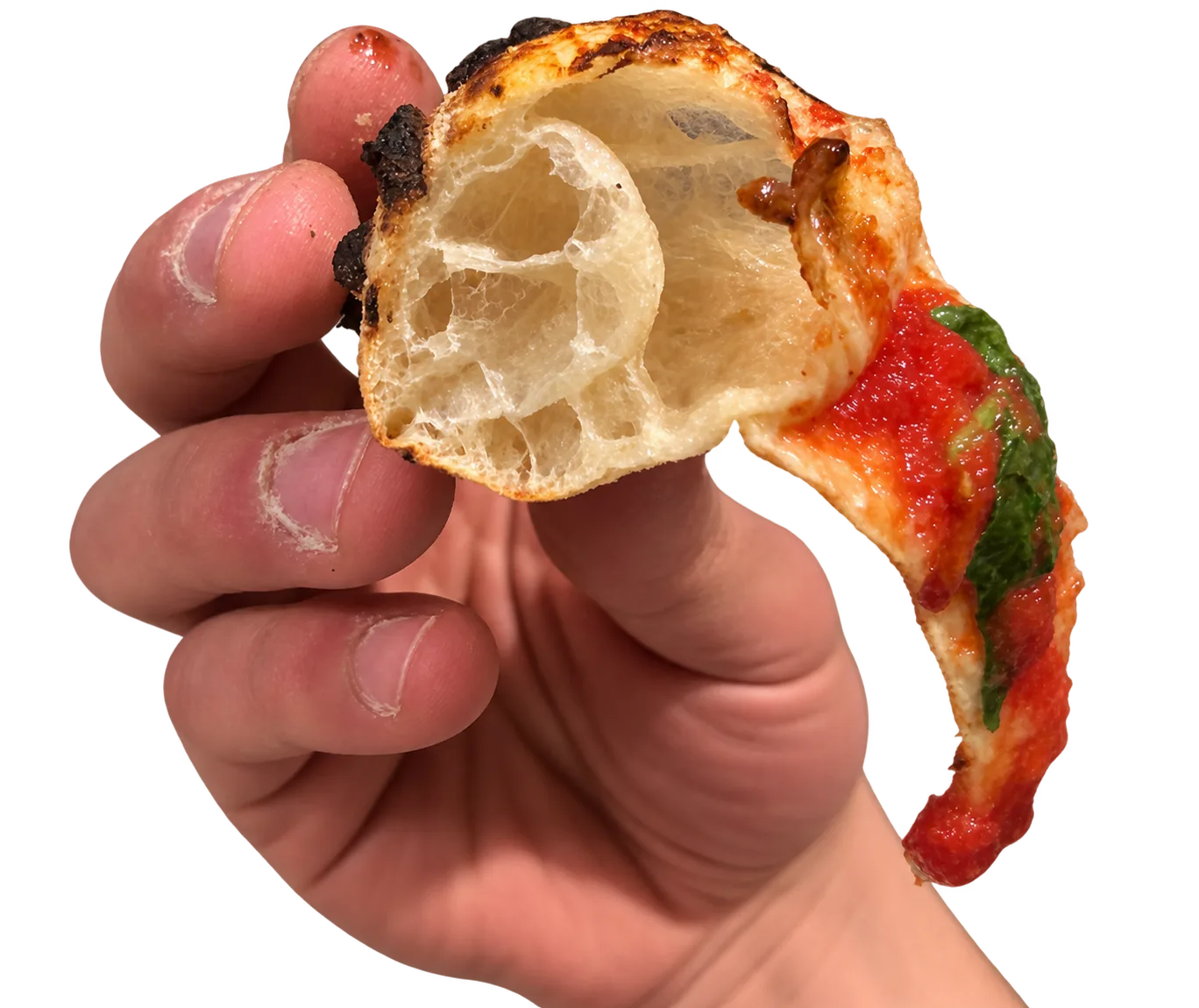
Clearly soft and sticky. It needs confident handling and strong flour. When it works, the rim is very light with large irregular bubbles. When it does not, the dough spreads, tears and sticks to the peel.
None of these is 'correct'. They are tools. The right hydration is the one your flour, oven and hands can manage consistently.
3. How water changes stretch and bake
- Stretch: more water makes the gluten more extensible — the dough stretches further with less effort, but also tears more easily.
- Fermentation: wetter doughs ferment faster, because yeast moves and feeds more easily.
- Oven spring: more water means more steam inside the rim, which can push it higher and create bigger bubbles.
- Crust: wetter doughs stay softer inside during long bakes; drier doughs crisp and colour faster.
- Handling: every extra percent makes shaping and launching a little harder.
4. Home oven vs high heat
In a wood-fired or high-heat pizza oven around 430–480 °C, the pizza bakes in 60–90 seconds. The crust sets almost instantly, so the dough does not have time to dry out. Moderate hydration works beautifully here.
In a home oven at 250–290 °C, the bake takes several minutes. Over that time, water evaporates from the base and the rim. A slightly higher hydration helps the pizza stay soft rather than turning into a cracker. Many home bakers find that nudging hydration up a few points is one of the easiest improvements they can make.
The equipment matters too — a steel transfers heat faster than a stone and changes how the base bakes. Read Neapolitan pizza in a home oven and the pizza steel vs stone guide for the full setup.
5. How to adjust hydration safely
The safest way to find your number is to change it slowly, one variable at a time:
- Start at a moderate hydration you can handle comfortably.
- Raise water by 2 percentage points per batch — never jump 10 points at once.
- Keep flour, salt, yeast and timing identical while you test.
- Hold back a small part of the water at the start of mixing and add it gradually once the gluten has formed.
- Write down how the dough felt at balling, after fermentation, and in the oven.
If the dough becomes sticky and weak, step back 2 points or choose a stronger flour — see 00 flour for pizza. If it feels tight and the rim does not rise, add a little more water or give it more fermentation time.
Hydration also works together with the preferment. A biga is kept deliberately dry, and the rest of the water is added in the final dough. The exact balance used in the Secrets of Pizza method — biga hydration, final hydration and when to add the water — is in the eBook. The step-by-step logic is in How to Make Neapolitan Pizza Dough.
6. Common hydration mistakes
Copying a high number from social media
A 75% dough made with a strong flour by a professional does not translate to a supermarket flour in a home kitchen.
Adding flour to fix sticky dough
Extra bench flour changes the real hydration and leaves raw flour on the base. Use wet hands or a scraper instead.
Forgetting the flour matters
Every flour absorbs water differently. The same percentage can feel perfect with one bag and soupy with another.
Changing hydration and time together
If you change two things at once, you will never know which one helped.
Frequently asked questions
What is hydration in pizza dough?
Hydration is the weight of water divided by the weight of flour, shown as a percentage. 650 g of water in 1,000 g of flour is 65% hydration.
What hydration is best for Neapolitan pizza?
Traditional Neapolitan doughs usually sit somewhere around 58–65%. Many modern Neapolitan-style doughs go higher, toward 70%, for a lighter, more open rim. The best number depends on your flour and your oven.
Is higher hydration always better?
No. Higher hydration can give a lighter crumb, but only if the flour is strong enough and your handling is good. Too much water gives a sticky dough that tears, spreads and bakes flat.
Should I use higher hydration in a home oven?
Often slightly, yes. A home oven bakes for several minutes instead of 90 seconds, so a bit more water helps keep the crumb soft and stops the crust drying out.
Get the tested hydration
The Secrets of Pizza eBook gives the exact biga and final-dough hydration, and when to add the water, for wood-fired and home ovens.
Get the Secrets of Pizza Guide — $29.99