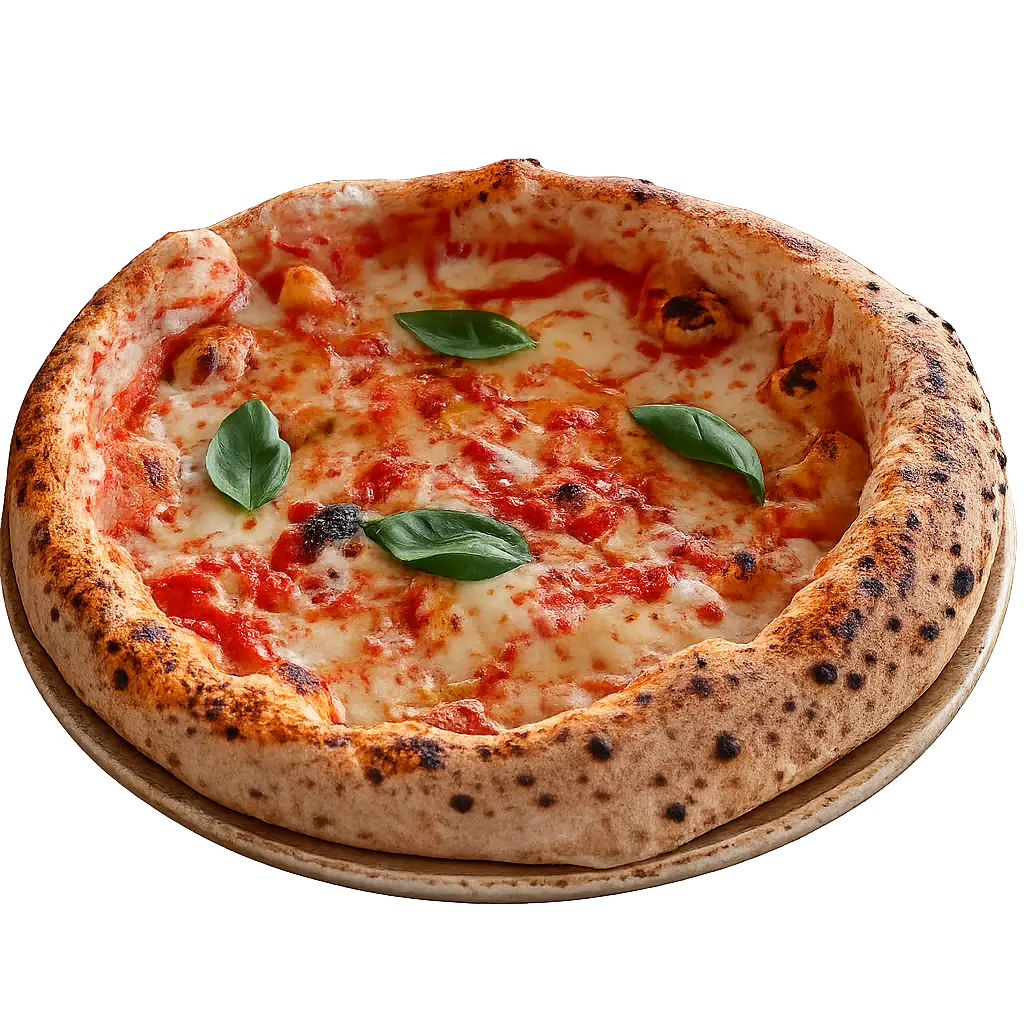
Pizza Steel vs Stone in a Home Oven
The surface you bake on decides how close a home oven gets to Naples. Here is how steel, stone and broiler compare — and how to use them.
In this guide
1. Why the surface matters
A home oven heats the air to around 250–290 °C. But pizza is not baked by air alone. The base is baked by the surface it sits on, and the top by radiant heat from above. In a Neapolitan oven, the floor is around 430 °C and the dome radiates enormous heat, so the pizza bakes in about 90 seconds.
At home, you cannot reach those temperatures, but you can choose how efficiently heat moves into the dough. That is what a steel or stone does: it stores heat during the preheat and releases it into the base the moment the pizza lands.
This guide extends Neapolitan pizza in a home oven, which covers the overall bake. Here we focus on the equipment decision and how to use it.
2. Steel vs stone vs broiler
Pizza steel
Steel conducts heat many times faster than ceramic. In practice, that means a steel at 275 °C bakes the base like a much hotter stone. You get stronger oven spring, a puffier rim and a well-browned base in a shorter time. It is heavy, practically unbreakable and works in almost any oven.
Pizza stone
Cordierite or ceramic stones hold heat well but transfer it more gently. They are lighter and cheaper, and they are more forgiving if your oven runs very hot. The downside is a slightly paler base and a longer bake. Stones can crack with thermal shock.
Broiler (grill)
Not a surface but a heat source. Using the top element adds the radiant heat a home oven normally lacks. Combined with a steel placed high in the oven, it is the closest a domestic oven gets to the heat of a dome.
- Best overall for Neapolitan-style at home: steel on a high rack plus broiler.
- Good budget option: a thick stone, preheated long.
- Avoid: baking trays and bare racks — they cannot store enough heat.
3. Preheat properly
Most disappointing home pizzas are preheat failures. The oven light turns off at temperature long before the steel is ready.
- Place the steel or stone on the upper third of the oven, about 10–15 cm below the top element.
- Preheat at maximum for 45–60 minutes.
- If your oven has a broiler, switch it on for the last 10 minutes of the preheat to charge the top of the steel.
- An infrared thermometer is the best way to know: read the surface, not the dial.
- Allow 3–5 minutes of recovery between pizzas so the surface heats back up.
4. Launching the pizza
Launching is where many good pizzas are lost. A few rules make it reliable:
- Dust the peel lightly with semolina or flour — not too much, or it will burn on the steel.
- Build the pizza on the peel quickly. The longer it sits, the more it sticks.
- Give the peel a small shake before you open the oven; the pizza should slide freely.
- Place the tip of the peel at the back of the steel and pull back in one smooth movement.
- Close the door immediately. Every second open loses heat.
Rotate once halfway through if your oven bakes unevenly. Finish with 30–60 seconds under the broiler if the rim needs more colour — but stay with it.
5. Dough adjustments below 450 °C
A dough designed for 90 seconds at 450 °C behaves differently over 4–6 minutes at 275 °C. Small adjustments help:
- Slightly higher hydration keeps the crumb soft during the longer bake — see pizza dough hydration.
- A longer fermentation leaves more sugars for browning at lower temperature.
- Stretch the centre a touch thicker so it does not dry out.
- Keep toppings light and well drained; wet toppings steam instead of bake.
- Some bakers add a small share of bread flour or malt for colour; purists skip it.
The dough method itself — mixing, fermenting and balling — is in How to Make Neapolitan Pizza Dough. The Secrets of Pizza eBook gives the home-oven version of the dough and a full bake schedule.
6. Buying a steel or stone
- Size: measure your oven and leave a few centimetres of air around the edges.
- Thickness: around 6 mm steel is a strong all-rounder; 10 mm holds more heat but is very heavy.
- Material: carbon steel needs seasoning like a pan; stainless is not ideal for heat transfer.
- Stone: choose thick cordierite and never put it into a hot oven cold, or wash it with soap.
- Accessories: a thin metal launching peel and an infrared thermometer are worth more than an expensive steel.
7. Common mistakes
Steel too low in the oven
Low placement means no top heat. Pizzas come out with a done base and a pale top.
Short preheat
If the steel is not fully charged, you lose its main advantage.
Too much bench flour
Excess flour burns on steel and gives a bitter base.
Treating the broiler like a timer
Broiler heat is intense and uneven. Watch every second of it.
Frequently asked questions
Is a pizza steel better than a stone?
For most home ovens, yes. Steel conducts heat much faster than cordierite stone, so it delivers more energy into the base in the few minutes a home-oven pizza bakes. A stone still works, it just gives a slightly paler, less puffy result.
How long should I preheat a pizza steel?
Plan on 45–60 minutes at your oven's maximum temperature. The oven air heats in 15 minutes; the steel takes much longer to fully charge.
What thickness of pizza steel should I buy?
Around 6 mm is a good all-round choice for home ovens: enough mass to hold heat between pizzas without being too heavy to handle.
Can I use the broiler with a pizza steel?
Yes. Placing the steel high and using the broiler at the end of the preheat or the end of the bake adds top heat that helps the rim blister, closer to a wood-fired dome.
Get the home-oven chapter
The Secrets of Pizza eBook includes the home-oven dough version, preheat and broiler timing and the full bake sequence.
Get the Secrets of Pizza Guide — $29.99