Authentic Margherita Pizza Recipe
Tomato, mozzarella, basil, oil — four toppings and no room for mistakes. Here is what makes a Margherita authentic and how to bake it.
In this guide
1. What makes a real Margherita
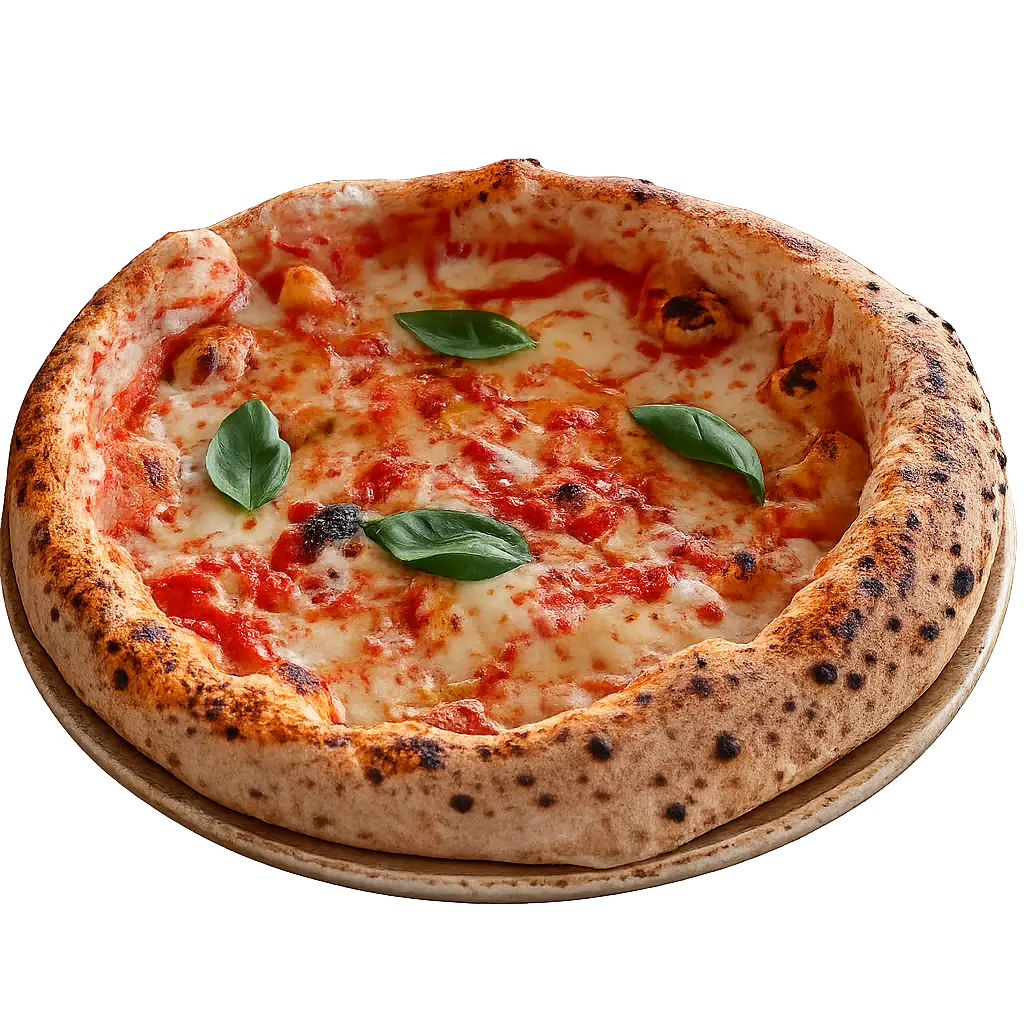
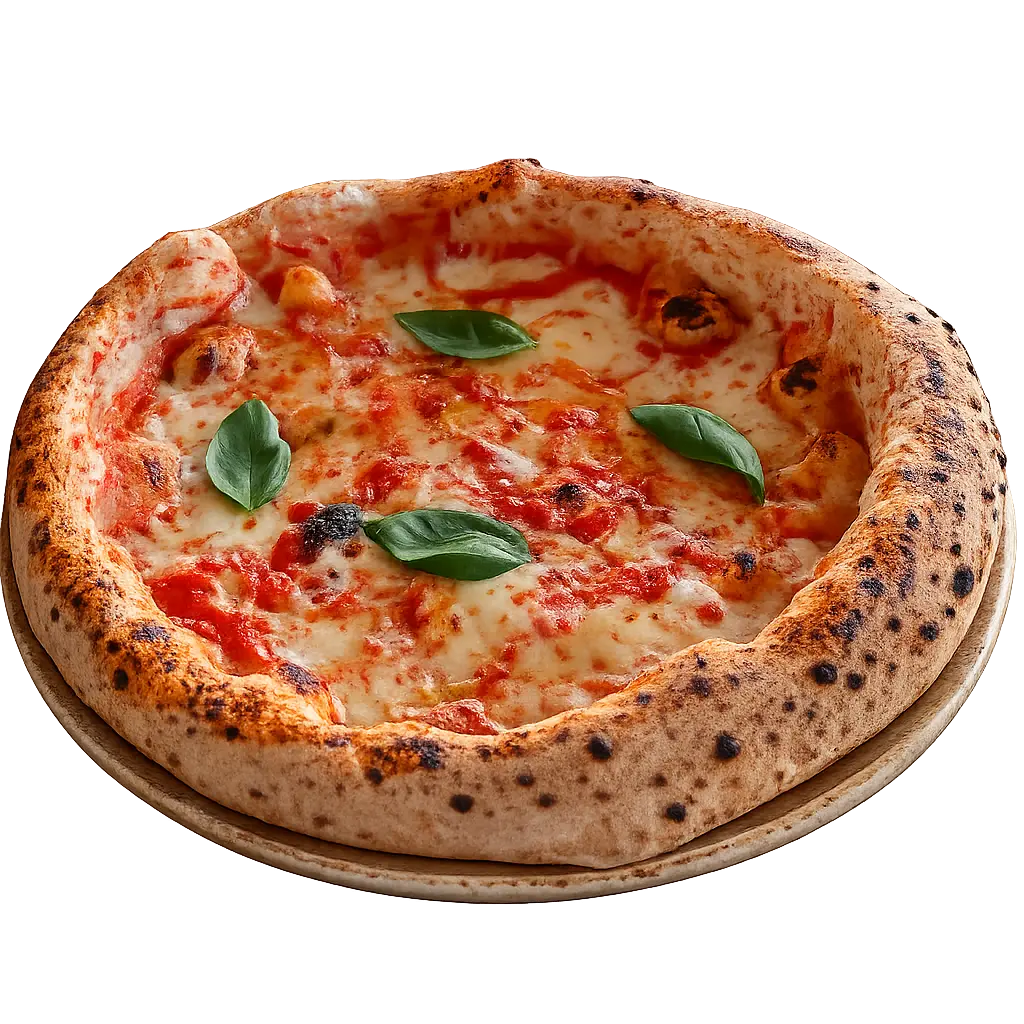
The Margherita is the most famous pizza in the world and one of the simplest. It carries the colours of the Italian flag: red tomato, white mozzarella, green basil. Because there is so little on it, every element must be right. There is nowhere to hide a weak dough or a watery cheese.
An authentic Margherita is built on a Neapolitan dough: soft, thin in the centre, with a puffy, lightly charred cornicione. For the full definition of the style and its rules, read What Is Neapolitan Pizza?.
2. The ingredients
Tomatoes
San Marzano tomatoes — ideally DOP, from the volcanic soil near Vesuvius — are the classic choice. They are sweet, low in acidity and have few seeds. Good Italian peeled plum tomatoes also work. Crush them by hand or pass them through a food mill, add a pinch of salt, and nothing else.
Mozzarella
Fior di latte (cow's milk mozzarella) is traditional for Margherita; buffalo mozzarella makes a 'Margherita con bufala'. Fresh mozzarella holds a lot of water, so tear or slice it and let it drain for a while before topping.
Basil
Fresh, large-leaf Genovese basil. A few leaves are enough.
Olive oil
A thin drizzle of good extra-virgin olive oil in a spiral or a few drops over the top.
Dough
The foundation. A well-fermented Neapolitan dough is what separates a real Margherita from tomato bread. See How to Make Neapolitan Pizza Dough.
3. Dough readiness cues
Before you top anything, check that the dough ball is ready to open:
- It has relaxed and spread slightly, with a smooth, soft surface.
- Small bubbles are visible underneath or on the sides.
- A light press leaves a dent that springs back slowly.
- It opens from the centre outward without shrinking back.
- It smells mildly sweet and yeasty, not sour.
Press from the centre outward with your fingertips, leaving a border of about 1–2 cm untouched. That untouched border becomes the cornicione. Never use a rolling pin — it pushes the gas out of the rim.
4. Topping order
- Spread a thin layer of crushed tomato with the back of a spoon in a spiral, stopping before the border.
- Add the drained mozzarella in pieces, evenly spaced — not a solid layer.
- Add a few basil leaves.
- Finish with a thin drizzle of olive oil.
- Launch immediately; a topped pizza sitting on the peel starts to stick and soak.
Less is more. A Margherita with too much sauce and cheese becomes soupy in the centre, especially in a home oven.
5. Bake cues
In a wood-fired oven around 450 °C, a Margherita bakes in 60–90 seconds. In a home oven with a preheated steel, expect around 4–6 minutes. Watch for these cues rather than a timer:
- The rim puffs quickly and develops dark 'leopard' spots.
- The mozzarella melts fully and just starts to bubble, but does not brown heavily.
- The tomato looks bright and slightly reduced, not dried out.
- The underside is spotted, not uniformly brown or pale.
Home-oven setup is covered in Neapolitan pizza in a home oven and pizza steel vs stone.
6. Common Margherita mistakes
Wet mozzarella
Undrained cheese floods the centre. Drain, pat dry and use less.
Cooked or seasoned sauce
Garlic, oregano and long-cooked sauce belong to other pizzas. Margherita uses raw tomato and salt.
Underfermented dough
A young dough bakes dense and pale and tastes of raw flour.
Overloading
The Margherita is a balance. Too much of anything breaks it.
Browned cheese
If the cheese browns before the rim is done, the oven is too cool or the pizza is too high under the broiler.
7. Close relatives
Once your Margherita is right, the classic relatives follow naturally: Margherita con bufala with buffalo mozzarella, and the Marinara — tomato, garlic, oregano and oil, no cheese at all. Mastering these two teaches you more about pizza than any complex topping.
Frequently asked questions
What is on an authentic Margherita pizza?
Tomato, mozzarella (fior di latte or buffalo mozzarella), fresh basil, extra-virgin olive oil and a little salt, on a Neapolitan dough. Some add a touch of grated hard cheese. Nothing else.
Should I use fresh or low-moisture mozzarella?
Fresh fior di latte is traditional. Drain it well, cut or tear it, and let excess moisture escape before topping, or it will flood the pizza.
Should tomato sauce be cooked for Margherita?
No. Traditional Neapolitan pizza uses raw crushed tomatoes with a pinch of salt. The sauce cooks in the oven.
When do you add basil to a Margherita?
Traditionally before baking, so it perfumes the pizza. Some pizzaioli add a leaf after baking for fresh colour. Both are common.
Get the dough behind the Margherita
The Secrets of Pizza eBook gives the full biga dough recipe, stretching technique and the sauce and cheese chapter for a real Neapolitan Margherita.
Get the Secrets of Pizza Guide — $29.99