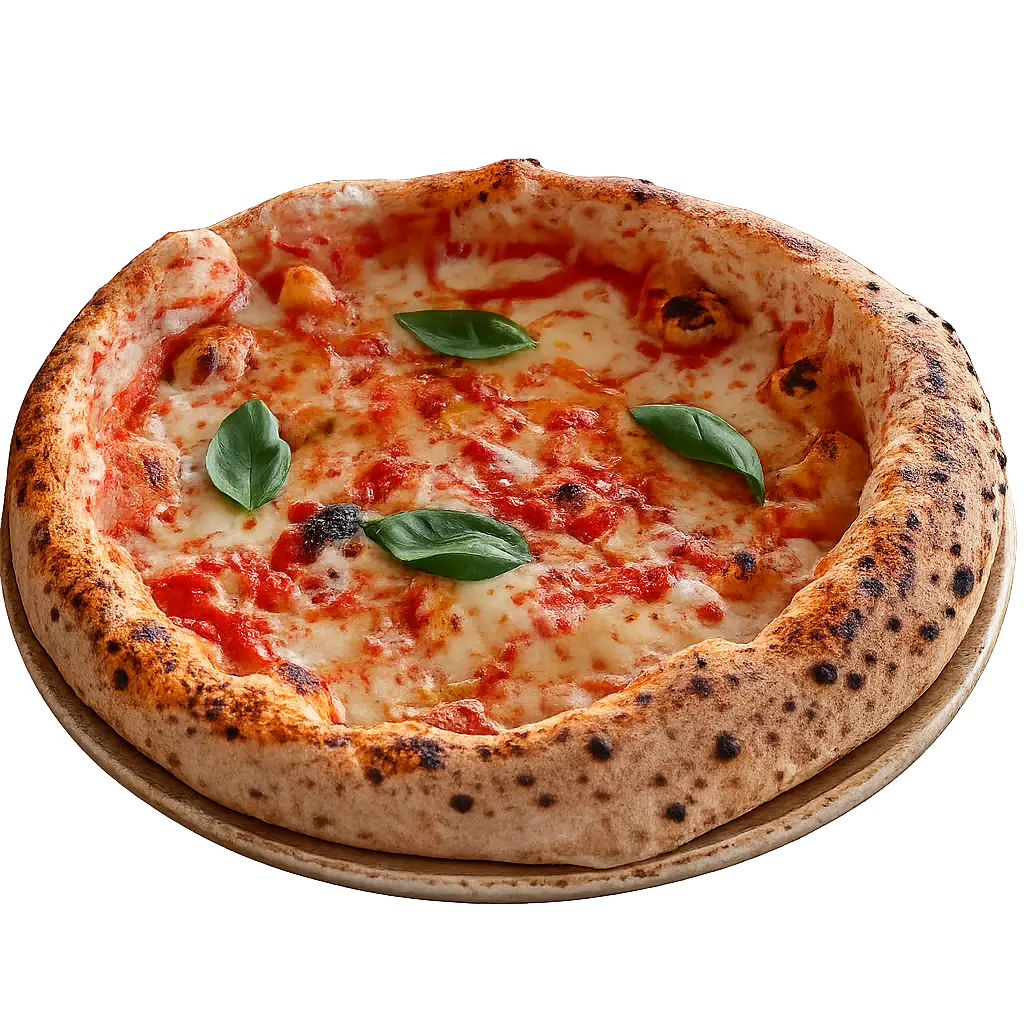
Marinara Pizza Napoletana
No cheese, four toppings, and the purest test of a pizza dough. Here is the classic Marinara — and how modern pizzerias rethink it.
In this guide
1. The classic Marinara
The Marinara is older than the Margherita and even simpler: tomato, garlic, oregano and olive oil. No mozzarella, no basil. It is sometimes called the purest test of a pizzaiolo, because the dough and the tomato carry the whole pizza.
Together with the Margherita, it is one of the two pizzas that define the Neapolitan tradition. If you want the rules and history of the style, read What Is Neapolitan Pizza?.
2. The ingredients
- Tomato: San Marzano or good Italian peeled plum tomatoes, crushed by hand with a pinch of salt. Raw, never cooked.
- Garlic: fresh cloves, sliced thin and even.
- Oregano: dried, ideally Mediterranean oregano, rubbed between your fingers to release the aroma.
- Olive oil: a generous drizzle of fruity extra-virgin olive oil — with no cheese, the oil adds the richness.
Because the list is so short, ingredient quality matters more than on almost any other pizza. See Neapolitan pizza ingredients for how to choose tomatoes and oil.
3. Building the pizza
- Open the dough from the centre outward, leaving a 1–2 cm border.
- Spread slightly more tomato than for a Margherita — it is the main topping — but keep it thin enough to see the dough in places.
- Scatter the sliced garlic evenly.
- Sprinkle the oregano.
- Drizzle olive oil in a spiral.
Without cheese to protect it, the tomato is exposed to the full heat of the oven. A slightly more generous layer stops it drying out.
4. A modern rebuild idea
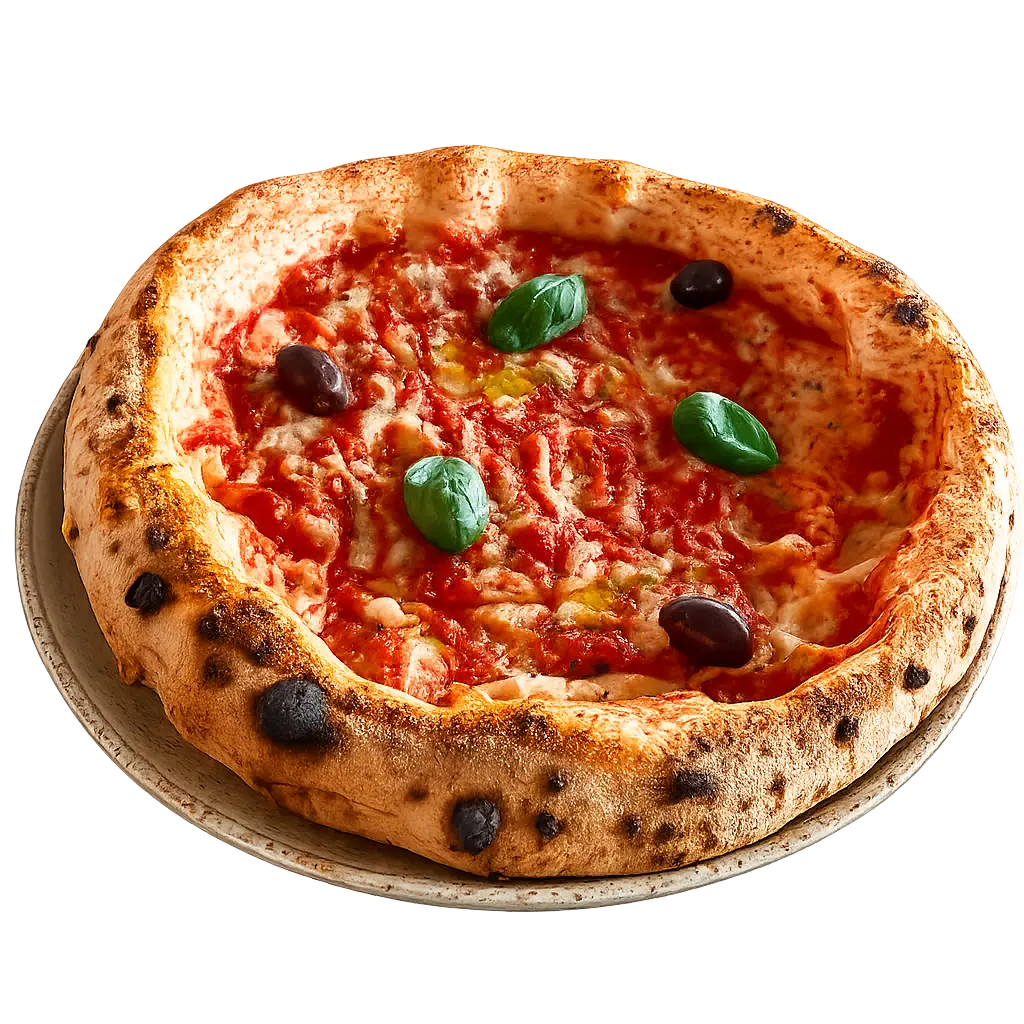
Many modern pizzerias keep the Marinara's soul — tomato, garlic, oregano, oil — and rebuild the textures around it. Common directions include:
- Using two tomato textures: a raw crushed base plus roasted or confit tomatoes added after baking.
- Turning the garlic into a smooth garlic cream or infused oil instead of raw slices.
- Adding black olives or capers for a salty, briny accent.
- Finishing with fresh oregano or a crunchy element like toasted breadcrumbs.
The Secrets of Pizza eBook includes a full 'Marinara v2.0' — the exact components, preparation and assembly order — as part of its bonus chapter of topping combinations. Here the idea is enough to start experimenting on your own.
5. Dough and bake cues
A Marinara depends on the dough more than any other pizza. It needs a well-fermented, flavourful base, because there is no cheese to add richness. A biga or cold-fermented dough is ideal — see How to Make Neapolitan Pizza Dough.
- The dough ball should be relaxed and open easily without shrinking back.
- In a wood-fired oven, bake 60–90 seconds; in a home oven on a steel, around 4–6 minutes.
- The rim should puff and spot; the tomato should look glossy and slightly reduced.
- Garlic should be soft and golden at the edges, never dark brown.
6. Common mistakes
Burnt garlic
Slices that are too thin, or too close to the edge, burn and turn bitter. Keep them even and away from the rim.
Too little tomato
Without cheese, a thin smear dries out and cracks.
Stingy oil
Oil is a main ingredient on a Marinara, not a garnish.
Adding cheese
Then it is no longer a Marinara. Try a Margherita instead.
Weak dough
A young, flavourless dough makes a Marinara taste like bread with sauce.
Frequently asked questions
What is on a Marinara pizza?
Tomato, garlic, dried oregano and extra-virgin olive oil. No cheese. It is one of the two original pizzas recognised by Neapolitan tradition, alongside the Margherita.
Does Marinara pizza have seafood?
No. The name is often linked to the fishermen (marinai) who ate it, not to seafood on the pizza.
Should the garlic be raw or cooked?
Traditionally, thinly sliced raw garlic goes on before baking and cooks in the oven. Too thick and it stays harsh; too thin and it burns.
Is Marinara pizza vegan?
The classic Marinara has no cheese, so with a dough made from flour, water, salt and yeast it is naturally vegan.
Get Marinara v2.0 and the full dough
The Secrets of Pizza eBook includes the complete Marinara v2.0 build in its bonus chapter, plus the biga dough it is baked on.
Get the Secrets of Pizza Guide — $29.99