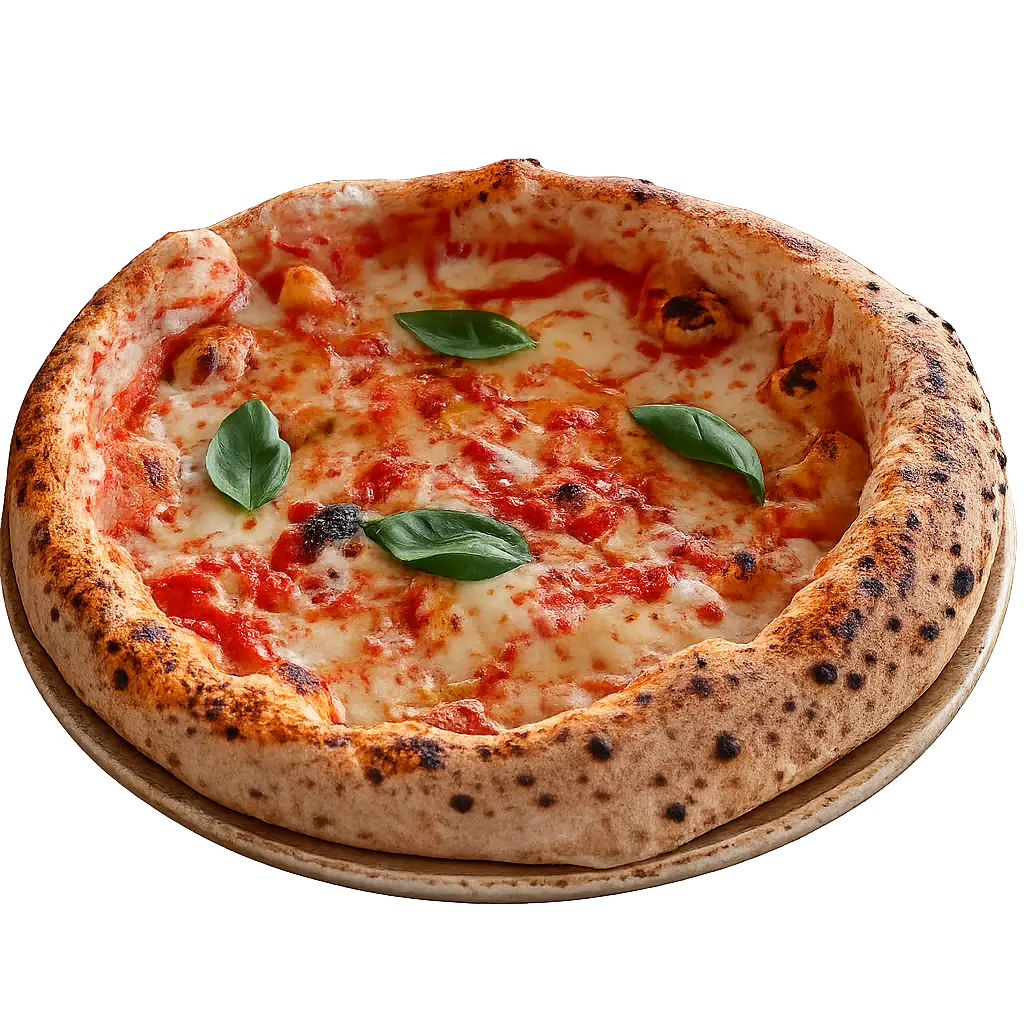
00 Flour for Pizza
00 flour is the backbone of Neapolitan dough — but the label alone does not tell you whether a flour will work. Here is how to choose the right one.
In this guide
1. What 00 actually means
Italian flour is graded by how finely it is milled and how much of the outer bran is left in. The grades run from 2 (coarser, darker) through 1 and 0 down to 00 — the finest and whitest. So when a bag says 00, it is telling you about texture and refinement, not about strength.
That is the first and most important thing to understand: two bags of 00 flour can behave completely differently. One might be a soft cake flour, another a strong pizza flour built for 48-hour fermentation. The label that matters most is the protein content and, if the mill publishes it, the W value.
The fine milling does matter for pizza. It lets the flour absorb water evenly and gives the dough a silky, smooth texture that stretches thin without tearing. It is one of the reasons a Neapolitan base can be paper-thin in the centre and still hold its shape.
2. The protein range to look for
Protein is what forms gluten, and gluten is what traps gas and lets the rim rise. For Neapolitan-style dough, a useful rule of thumb:
- Around 11–12% protein: fine for short fermentations of a few hours at room temperature.
- Around 12–13.5% protein: the sweet spot for long, cool fermentation and biga doughs.
- Above 14%: very strong — useful in blends, but on its own can make dough tight and hard to stretch.
Many Italian mills also publish a W value, which measures the flour's strength. Higher W flours tolerate longer fermentation. If you plan to make a biga pizza dough or a long cold ferment, choose a flour designed for it rather than a general-purpose 00.
3. Caputo-style 00 vs bread flour vs all-purpose
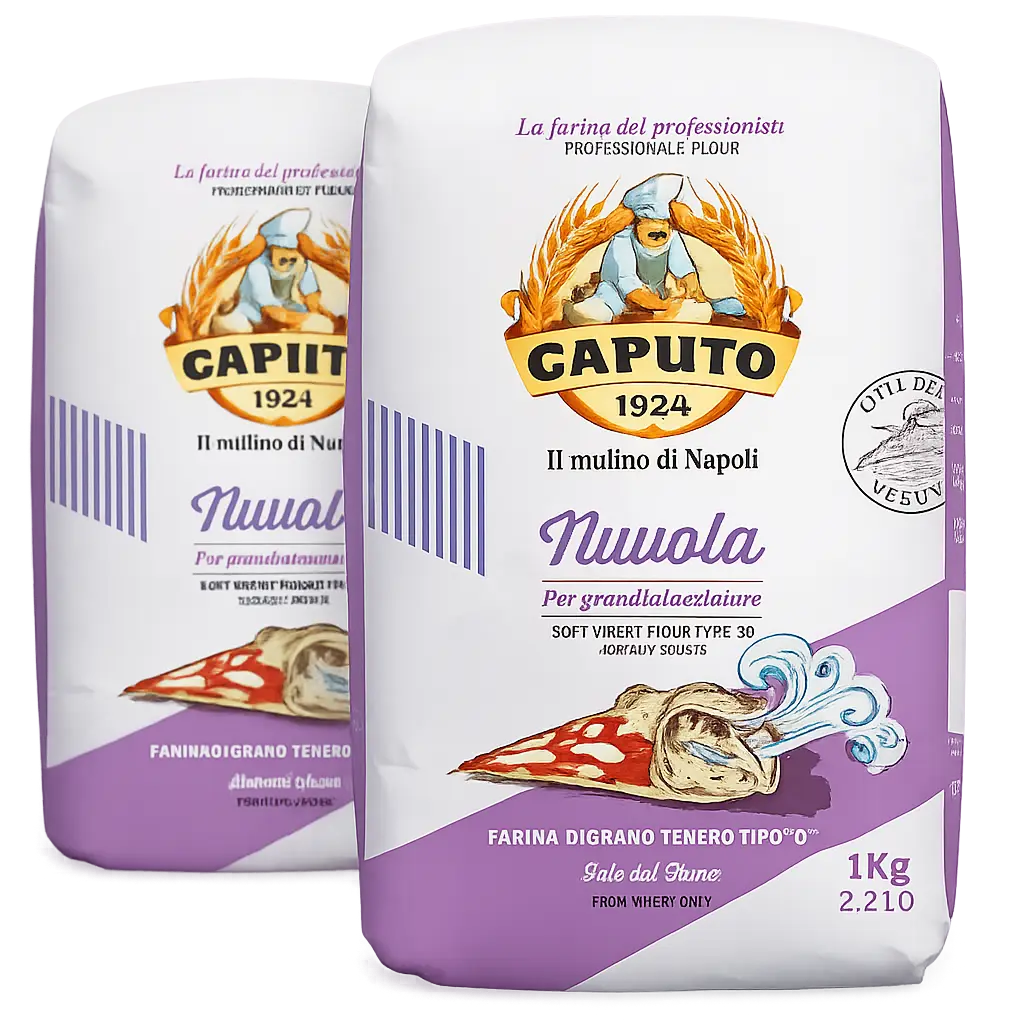
Pizza-grade 00 flour (Caputo-style)
Made specifically for pizza: finely milled, balanced protein, usually no added malt. It gives a soft, tender crumb and a light rim, and it is designed to bake at very high temperatures without burning too quickly. This is the classic choice for Neapolitan pizza.
Bread flour
Higher protein, coarser milling and often malted barley flour added to help browning. In a home oven, that extra browning can actually help. The trade-off is texture: bread flour gives a chewier, crustier result that feels closer to New York style than Naples.
All-purpose flour
A compromise flour meant for everything from cookies to bread. Protein is usually around 10–11.5%, which is often too weak for long fermentation. The dough tears more easily and the rim stays flatter.
4. What happens if you swap flours
Changing the flour is the single biggest variable in your dough, even if everything else stays the same. Here is what to expect:
- Swapping 00 for bread flour: dough absorbs more water, feels tighter, browns faster, bakes chewier.
- Swapping 00 for all-purpose: dough feels slacker, is more likely to tear, rises less in the oven.
- Swapping one 00 for another 00: can change everything, because protein and strength vary widely between brands.
When you switch flour, change nothing else for the first bake. Then adjust water and timing based on how the dough feels. The pizza dough hydration guide explains how to read and adjust water without guesswork.
5. Buying advice
- Buy from a real Italian mill that publishes protein and, ideally, W value for each flour.
- Choose a flour labelled for pizza, and for long fermentation if you use biga or a cold ferment.
- Buy in quantities you will use within a few months, and store it cool, dry and sealed.
- Stick to one flour for several bakes. Consistency teaches you more than constant experiments.
- If you only have a home oven, a pizza 00 designed for lower temperatures (or a blend with a little bread flour) can help browning.
For the full ingredient list — water, salt, yeast, tomatoes, cheese and oil — read Neapolitan pizza ingredients.
6. What to avoid
- '00' cake or pastry flours: finely milled but far too weak for pizza.
- Self-raising flour: contains baking powder and salt; it will ruin a yeast dough.
- Unlabelled flour with no protein information — you cannot plan fermentation around it.
- Mixing several flours at random each week; you will never learn what your dough is telling you.
- Old flour stored near heat or strong smells; flour absorbs both.
The right flour will not fix a poor method, but the wrong flour will break a good one. Once you have a reliable bag, the next step is the process itself — see How to Make Neapolitan Pizza Dough.
7. How to read a flour bag
Italian bags often show more information than supermarket flour elsewhere. Look for protein (proteine) on the nutrition table, the grade (tipo 00 or tipo 0), and any mention of fermentation time or W. Some mills print the ideal fermentation window directly on the bag — a useful clue for how the flour will behave with biga.
Outside Italy, you may see 'pizza flour' without a grade. That is fine: judge it by protein and by the mill's description. A flour made for Neapolitan pizza will usually say so.
Frequently asked questions
What does 00 mean on flour?
In Italy, 00 describes how finely the flour is milled and how much of the bran and germ has been removed. It is the finest, whitest grade. It does not say anything about protein or strength on its own.
What protein should 00 flour for pizza have?
For Neapolitan pizza, look for a 00 flour with roughly 11.5–13.5% protein. Long fermentations like biga benefit from the upper end of that range.
Can I use bread flour instead of 00 flour?
Yes, but expect a chewier, more bread-like crust that browns faster. Bread flour is milled coarser and often contains malt. It works well in home ovens but will not give the same soft, tender Neapolitan texture.
Is all-purpose flour OK for Neapolitan pizza?
All-purpose flour usually has too little strength for long fermentation. It can work for a quick dough, but it tends to tear when stretched and gives a flatter rim.
Know exactly which flour the method uses
The Secrets of Pizza eBook names the flour, the strength and the full dough formula behind the method — with every step photographed.
Get the Secrets of Pizza Guide — $29.99