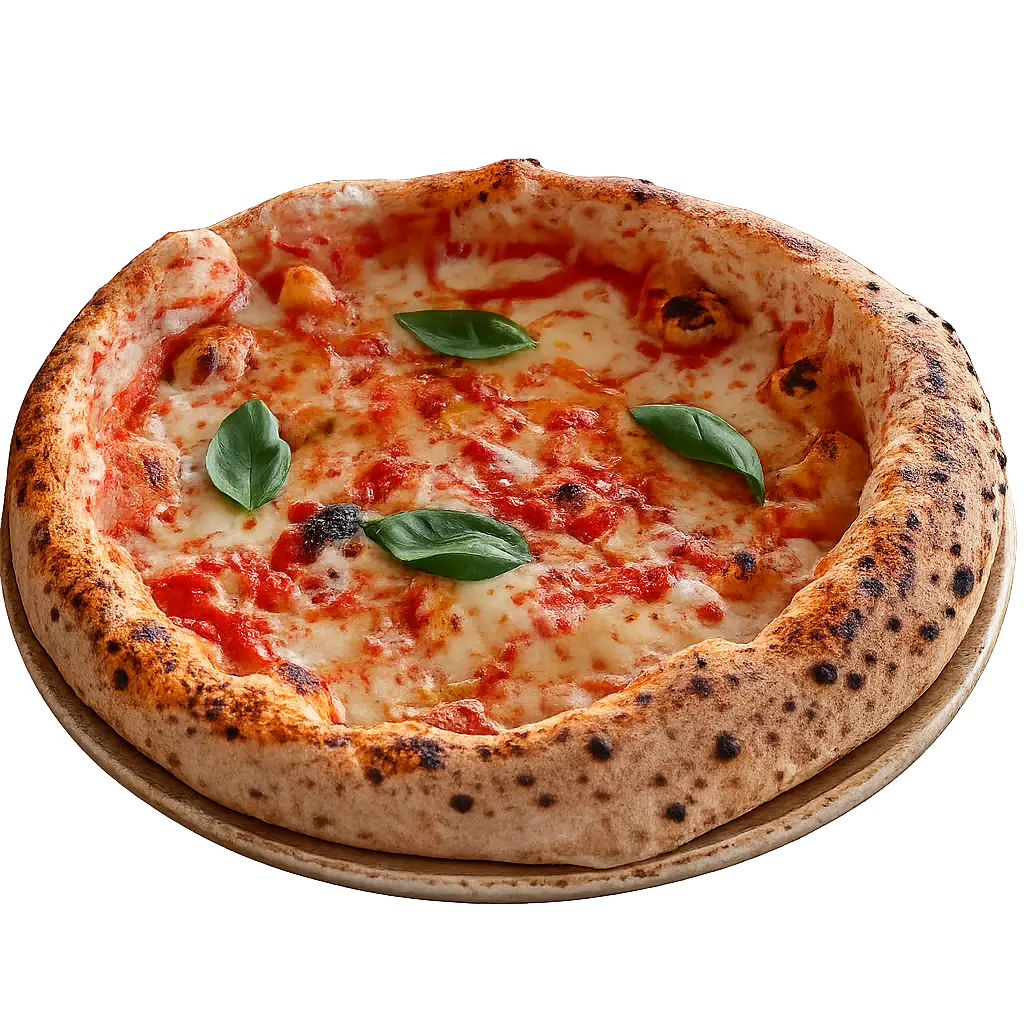
Biga Pizza Dough
Biga is the Italian preferment behind the lightest, most aromatic Neapolitan-style doughs. Here is what it is, why it works, and how to read it — without guessing.
In this guide
1. What is biga?
Biga is a preferment — a portion of the dough that you mix and ferment in advance, before the final dough exists. It is made from only flour, water and a very small amount of yeast. Unlike liquid starters, biga is stiff and shaggy: it looks more like damp crumbs than dough when you first mix it.
The idea is old and very Italian. Bakers in the north of Italy used biga to give their bread more flavour and a lighter structure long before commercial yeast was consistent. Pizzaioli adopted the same technique because it solves many problems of a quick, same-day dough: flat flavour, tight crumb and a rim that does not rise.
When you add the biga to the final dough, you are adding flour that has already been fermenting for many hours. It carries organic acids, aromatic compounds and a developed gluten network into the new dough. That is why biga doughs taste deeper and bake taller than a simple direct dough with the same ingredients.
2. Why biga is used for Napoletana
Neapolitan pizza lives or dies by its cornicione — the soft, puffy rim. A well-made biga dough gives three things that make that rim possible:
- Flavour: long, cool fermentation produces a gentle acidity and a toasted, almost nutty aroma you cannot get from a two-hour dough.
- Structure: the stiff preferment builds gluten slowly, so the final dough holds large gas bubbles without tearing.
- Digestibility: more of the starches and sugars are broken down before baking, which is why many people find biga pizza feels lighter.
Biga also makes the final dough more forgiving. Because much of the fermentation has already happened, the final dough needs less time and is easier to schedule around a real day — which matters as much at home as it does in a pizzeria. If you want the full picture of how biga fits into the whole process, read How to Make Neapolitan Pizza Dough.
3. Typical biga percentage range
Biga is described as a percentage of the total flour in the recipe. Across Italian pizzerias you will see a wide range:
- Around 30–50%: a milder dough, easy to handle, a good starting point for beginners.
- Around 50–80%: a clear biga character, more aroma and a lighter, more open crumb.
- Up to 100%: the whole dough is built from biga, giving maximum flavour but requiring more precise control.
The biga itself is usually kept at a low hydration — typically in the mid-40s to mid-50s percent — which is why it looks crumbly. Yeast is used in tiny amounts, often well under 1% of the biga flour, because the long rest does the work.
Choosing the exact numbers is where most home recipes go wrong, and where the Secrets of Pizza method is specific. The eBook gives the precise percentage, hydration and yeast quantity used in the method, tested for both wood-fired and home ovens. Here we focus on the logic so you understand what you are adjusting.
4. The 16–24 hour window
Most biga is fermented for roughly 16 to 24 hours. Temperature decides where in that window it will be ready. A classic approach is to keep the biga around 16–18 °C — cooler than a kitchen, warmer than a fridge. At that temperature the yeast works slowly and the flavour develops steadily.
If your kitchen is warm, the biga will be ready closer to 16 hours, or sooner. If it is cool, expect the full 24 hours. Some pizzaioli ferment the first part at room temperature and then move the biga to a cooler place to slow it down.
- Mix the biga in the evening, use it the next afternoon — this simple schedule fits most home cooks.
- Keep it covered so the surface does not dry into a crust.
- Use a container with room to grow; a ready biga roughly doubles in volume.
After the biga is mixed into the final dough, the dough itself can be used the same day or given a cold rest. Many pizzaioli combine biga with a fridge rest; see the cold ferment pizza dough guide for how those two fermentations work together.
5. Biga vs poolish vs direct dough
Biga
Stiff, low hydration, long and cool fermentation. More structure, a slightly acidic and nutty flavour, a tall and airy rim. It takes planning but is very consistent once you learn its cues.
Poolish
A liquid preferment made with equal weights of flour and water. It ferments faster, is very extensible and gives a sweeter, milder aroma. Poolish doughs stretch easily but can be slacker and harder to shape for beginners.
Direct (straight) dough
Everything mixed at once, then fermented. This is the traditional approach behind many Neapolitan doughs and is perfectly valid — but it relies entirely on time and temperature in the final dough. Without a long rest, direct doughs tend to taste flat and bake denser.
If you already make a direct dough and want more flavour and lift, switching part of your flour to a biga is one of the most effective changes you can make. The ingredients stay the same — see Neapolitan pizza ingredients for what to buy — only the process changes.
6. Look, smell and feel cues
Timings are guides; your senses are the real test. A ready biga shows all of these signs:
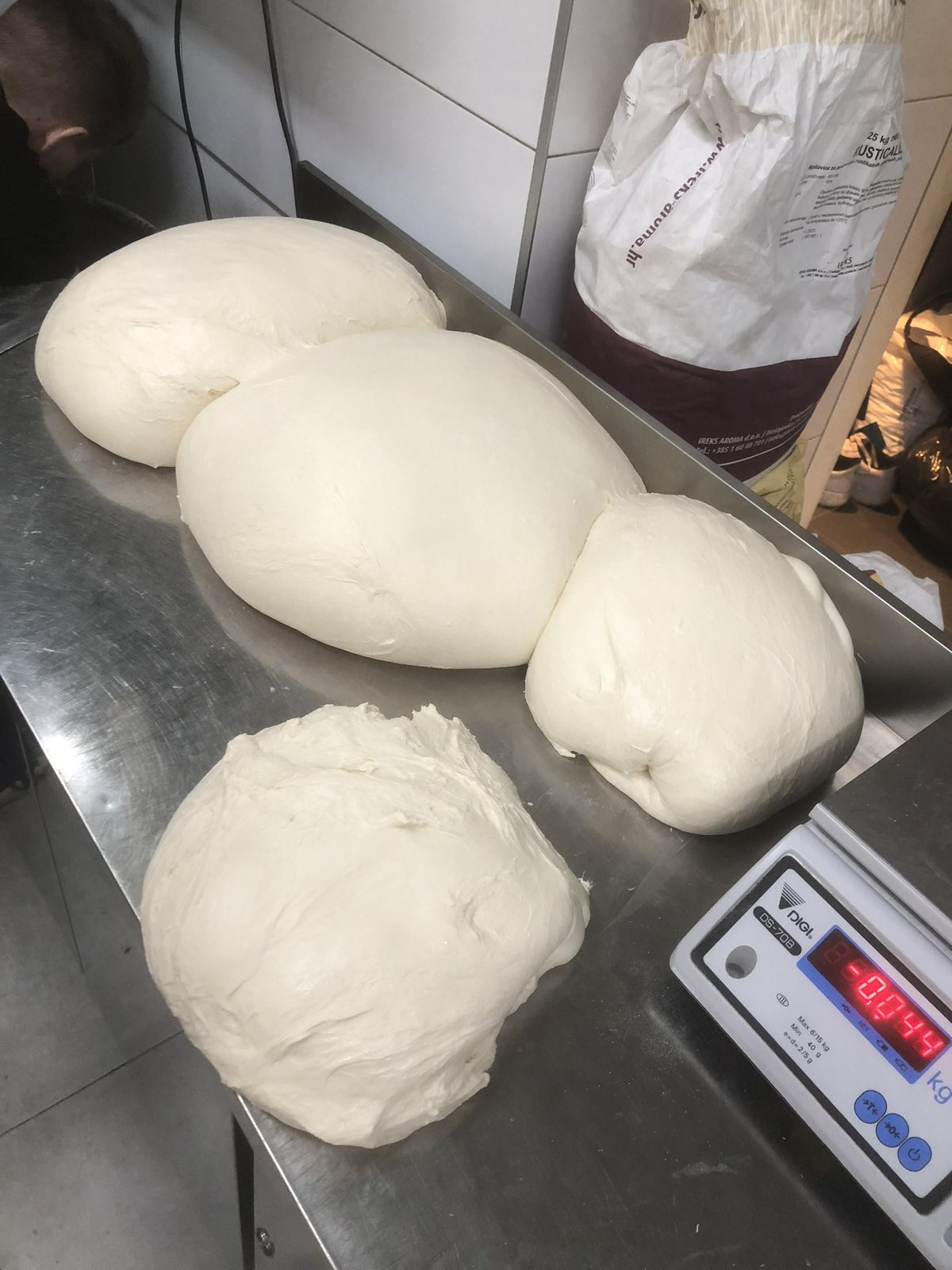
- Look: it has roughly doubled, with a domed or slightly flattened top and a web of small bubbles visible when you tear it.
- Smell: pleasantly sour and lightly alcoholic, like yogurt, beer or ripe fruit. Never sharp or solvent-like.
- Feel: soft and slightly sticky inside, no longer the dry crumbs you mixed. It tears in stretchy strands.
An under-fermented biga smells mostly of raw flour and still feels dry. Give it more time in a slightly warmer place. An over-fermented biga smells strongly of acetone, has collapsed, and tears without strength — the final dough will be weak and sticky.
7. Common biga failures
Too much yeast
The most common mistake. A biga needs very little yeast; too much and it overferments long before 16 hours, turning sour and weak.
Mixing it like bread dough
Biga should be mixed briefly until just combined — shaggy, not smooth. Kneading it into a ball changes how it ferments.
Ignoring temperature
A biga left in a 26 °C kitchen will not behave like one kept at 17 °C. If your results change from week to week, temperature is almost always the reason.
Using weak flour
A long biga needs flour strong enough to survive the fermentation. Low-protein flours collapse. Read the 00 flour for pizza guide for what to look for on the bag.
Adding the biga too cold
Biga straight from a cold spot slows the final dough dramatically. Let it come up to temperature or adjust your water temperature so the final dough ends up where you want it.
Frequently asked questions
What is biga in pizza dough?
Biga is a stiff Italian preferment made from flour, water and a small amount of yeast, left to ferment for roughly 16–24 hours before being mixed into the final dough. It adds flavour, strength and an open, airy crumb.
How much biga should I use in pizza dough?
Most pizzaioli use somewhere between 30% and 100% of the total flour as biga, depending on the flavour and structure they want. Lower percentages give a milder dough; higher percentages give more aroma and extensibility. The exact percentage used in the Secrets of Pizza method is in the eBook.
Is biga better than poolish for Neapolitan pizza?
Neither is objectively better. Biga is drier and gives more structure and a subtly nutty, slightly acidic flavour; poolish is liquid and gives more extensibility. Many Neapolitan-style pizzerias prefer biga because it produces a tall, light cornicione.
How do I know my biga is ready?
A ready biga has roughly doubled, smells pleasantly sour and alcoholic like yogurt or beer, shows small bubbles when torn, and feels soft instead of dry and crumbly. If it smells sharp like nail polish or has collapsed, it has gone too far.
Get the exact biga system
The Secrets of Pizza eBook gives the precise biga percentage, hydration, yeast and timing used in the method, step by step with photos.
Get the Secrets of Pizza Guide — $29.99