
Cold Ferment Pizza Dough
Time in the fridge is the cheapest ingredient in great pizza. Here is how long to ferment, when to ball and how to read the dough.
In this guide
1. What cold fermentation does
Cold fermentation means letting the dough ferment slowly in the fridge, usually around 3–5 °C, instead of at room temperature. The cold slows the yeast down dramatically, but it does not stop the enzymes in the flour. They keep breaking starches into sugars and proteins into smaller chains.
The result is a dough that tastes deeper and slightly tangy, stretches more easily, browns better in the oven and feels lighter to eat. It also gives you control: dough that would be ready in 6 hours at room temperature can wait 2 or 3 days in the fridge.
Cold fermentation and a preferment are not either/or. Many pizzaioli combine a biga with a cold rest of the final dough. That is the approach behind the 24-hour cold ferment mentioned in the Secrets of Pizza method.
2. 24h, 48h or 72h?
24 hours
The most practical window. Enough time for real flavour development and easier stretching, without much risk. A great default for most home cooks — mix today, bake tomorrow.
48 hours
More aroma, more extensibility, better browning. Many people find this the sweet spot. It needs a flour strong enough to hold up and a modest amount of yeast.
72 hours
Maximum flavour, but the margin for error shrinks. Weak flour or too much yeast will overferment. Use strong flour and reduce yeast further.
Longer is not automatically better. Past a certain point, the gluten weakens and the dough becomes slack and sour. Pick the window that fits your schedule and learn it well.
3. Fridge vs room temperature
Room-temperature fermentation is faster, more active and harder to control — a few degrees change everything. Fridge fermentation is slower and more predictable, as long as your fridge is stable.
- Most doughs get a short period at room temperature before going into the fridge, so fermentation starts.
- In the fridge, keep dough in sealed containers or trays so it does not dry out or pick up smells.
- Avoid the fridge door and the warmest shelves — temperature swings make timing unreliable.
- Take the dough out a few hours before baking. Cold dough is stiff and hard to stretch; it needs to warm and finish proofing.
That final warm-up is part of the fermentation, not just waiting. The dough should be relaxed and slightly puffy before you open it.
4. When to ball the dough
You can ball before or after the cold rest. Each option changes the result:
- Ball before the fridge (the common home approach): neat, even balls that go straight from fridge to bench. Easy to portion and plan.
- Bulk ferment, then ball after the fridge: stronger structure and often a taller rim, but the balls need 2–4 hours to relax before stretching.
Whichever you choose, ball with tension: a smooth, tight surface and a sealed underside. Loose balls spread in the fridge and become hard to stretch into rounds.
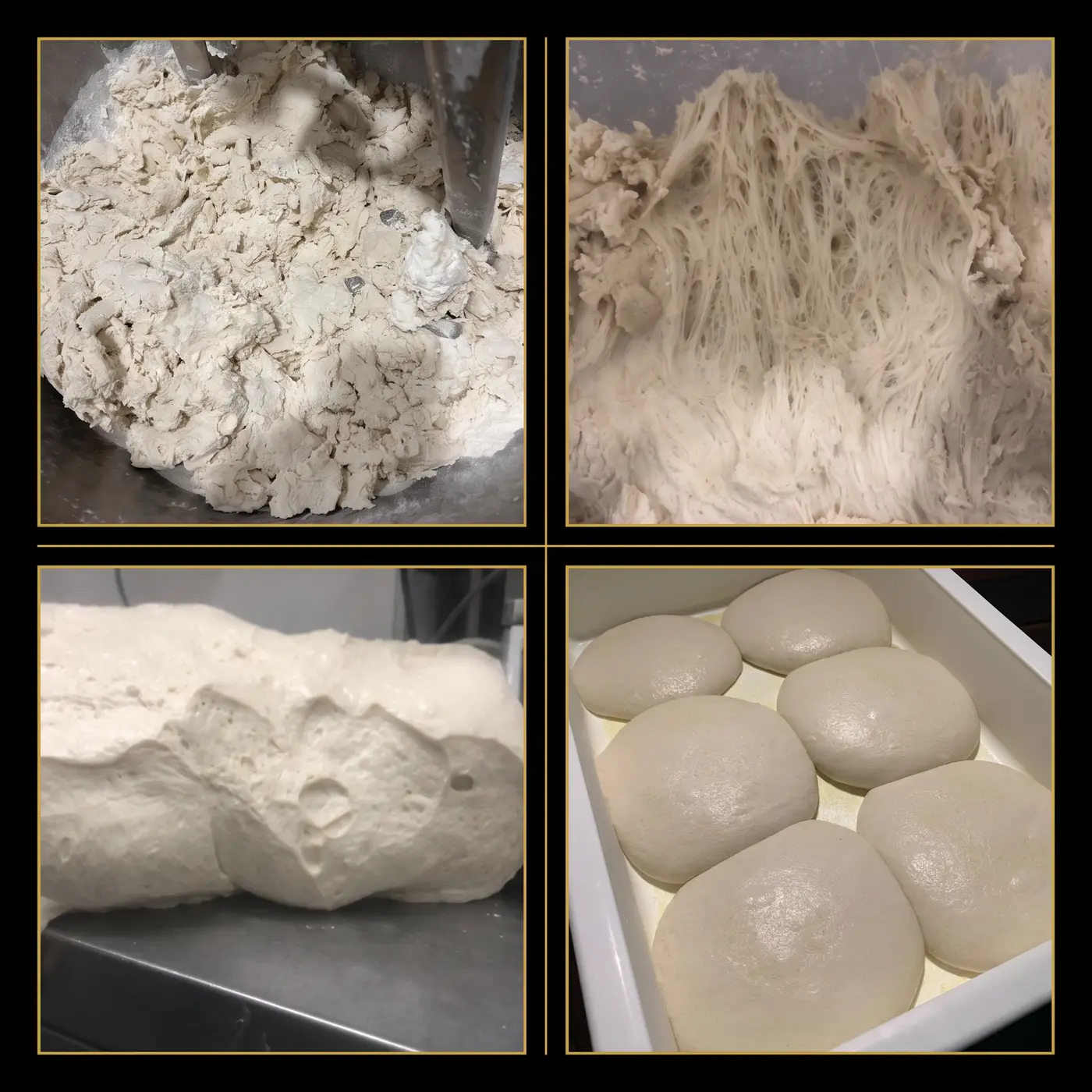
The step-by-step process — mixing, resting and balling — is covered in How to Make Neapolitan Pizza Dough.
5. Signs it is ready
- The ball has grown noticeably and looks soft and relaxed, not tight.
- Small bubbles are visible on the surface or underneath through a clear container.
- A gentle finger press leaves a dent that springs back slowly and not completely.
- It smells pleasant — lightly yeasty and slightly sweet-sour.
- It opens easily into a round without shrinking back.
6. Signs it is overfermented
- A strong sour, alcoholic or acetone smell.
- The balls have spread flat and merged or collapsed.
- Large bubbles burst on the surface; the dough feels slack and wet.
- It sticks badly and tears as soon as you stretch it.
- It bakes pale and flat because the sugars have been used up.
An overfermented dough can sometimes be rescued as a focaccia-style flatbread, but for pizza the fix is next time: less yeast, colder storage or a shorter window.
7. Common cold-ferment mistakes
Using the same yeast for 24h and 72h
Longer ferments need less yeast. Keeping the quantity constant is the main reason 72-hour doughs fail.
Baking straight from the fridge
Cold dough fights you on the bench and bakes dense. Give it time to warm up.
Weak flour
Long fermentation needs strength. See 00 flour for pizza.
Unstable fridge
A fridge opened constantly or set too warm will speed everything up unpredictably.
Frequently asked questions
How long should pizza dough cold ferment?
Between 24 and 72 hours is the common range. 24 hours already gives a clear improvement in flavour and texture; 48 hours is a sweet spot for many doughs; 72 hours needs strong flour and careful yeast control.
Is cold fermented dough better?
Usually, yes. Slow fermentation in the fridge develops more flavour, makes the dough easier to stretch, helps browning and makes the pizza lighter to digest.
Should I ball dough before or after the cold ferment?
Both work. Balling before the fridge gives neater, more even balls. Balling after gives a stronger structure but needs time to relax before stretching.
How do I know if dough is overfermented?
It smells strongly sour or alcoholic, looks slack and bubbly on the surface, sticks badly, tears when stretched and bakes pale and flat.
Get the full fermentation schedule
The Secrets of Pizza eBook gives the exact biga, cold ferment and proofing schedule — hour by hour — with the yeast quantities to match.
Get the Secrets of Pizza Guide — $29.99