How to Make Focaccia: Easy Homemade Italian Bread
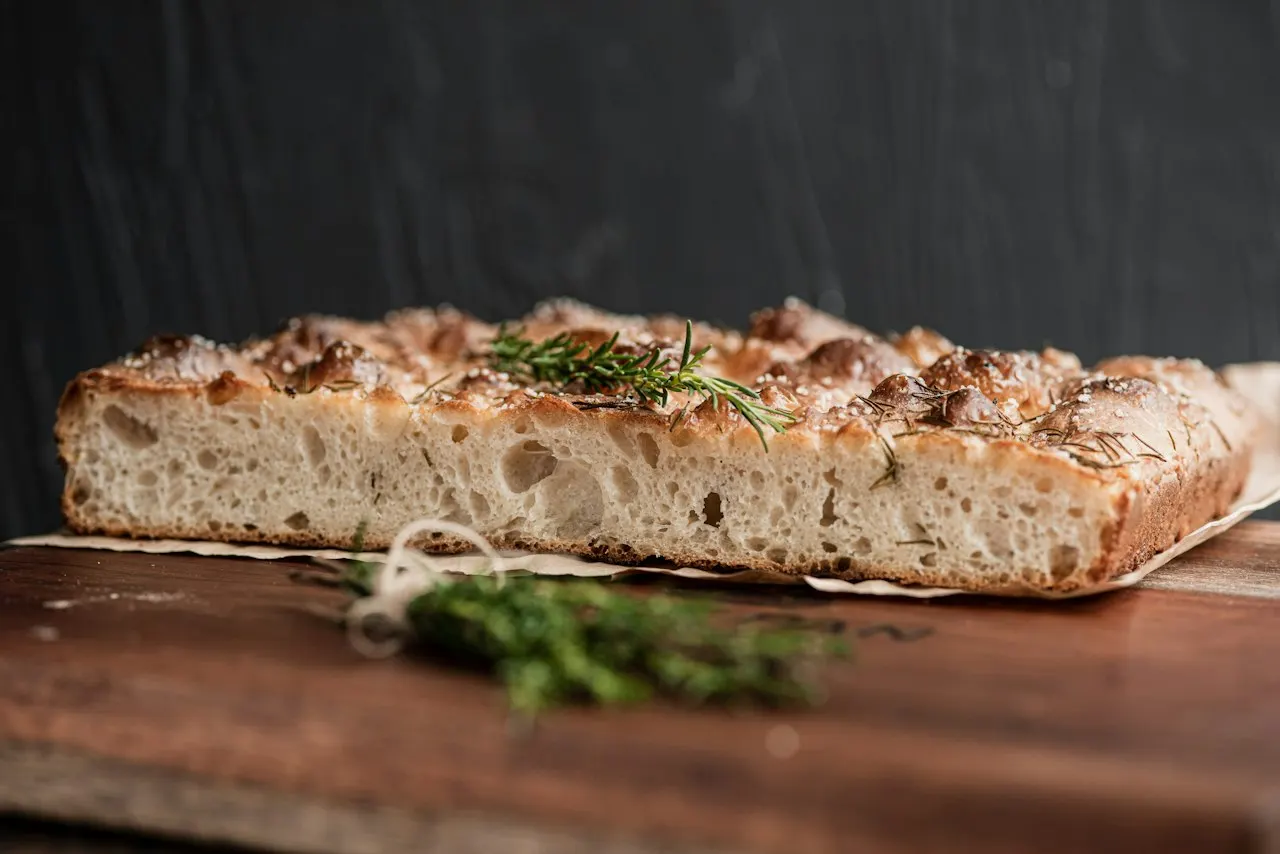
Learning how to make focaccia at home takes one bowl, one pan and no kneading. Good focaccia has a soft, airy interior, a golden, olive-oil-crisp bottom and that unmistakable dimpled top glistening with oil, rosemary and salt — and this easy method gets you there in an afternoon.
In this guide
Recipe overview
- Prep
- 20 min
- Rise
- 3 hr
- Bake
- 25 min
- Total
- 3 hr 45 min
- Yield
- 1 pan · 12 pieces
- Difficulty
- Easy
What is focaccia?
Focaccia is a flat, pan-baked Italian bread from the same family as pizza. Where ordinary sandwich bread is kneaded, shaped and baked in a loaf tin, focaccia is a very wet dough pressed into a pan full of olive oil, dimpled with the fingertips and baked hot.
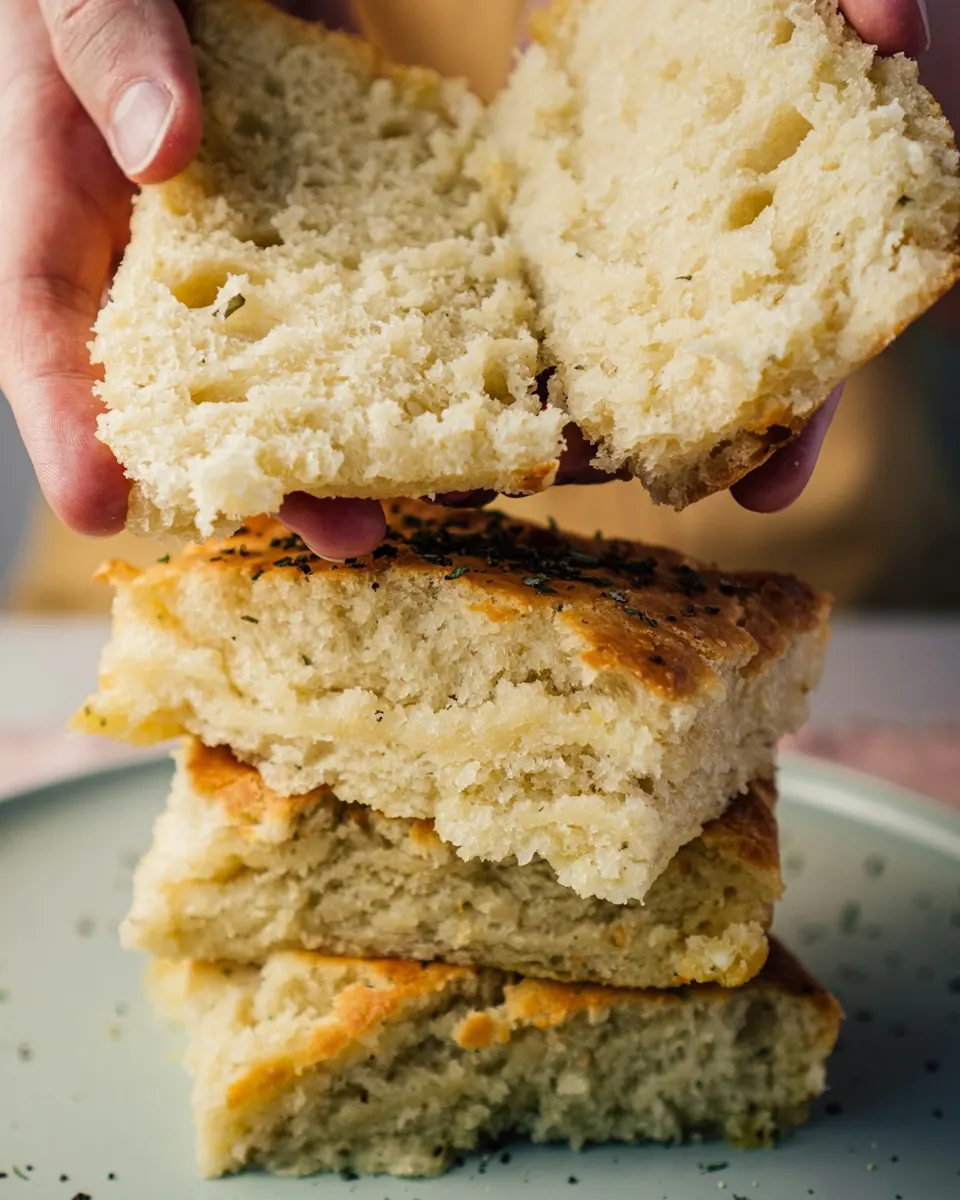
Two things give it its character. The olive oil essentially fries the base and edges, so they turn golden and crisp. And the slow fermentation and high water content create a soft, open crumb with irregular bubbles. The dimples hold little pools of oil and salt on the surface.
Regional styles vary — focaccia genovese is thinner and saltier, Apulian versions often include potato and tomatoes — but this homemade focaccia is the classic, thick, rosemary-topped style most people picture.
Ingredients for homemade focaccia
- Flour (500 g) — bread flour or a strong 00 gives the structure to trap big bubbles. All-purpose flour works with a slightly tighter crumb.
- Water (400 g) — 80% hydration makes the dough sticky but gives the airy interior. New to wet doughs? Read pizza dough hydration; you can drop to 360 g for an easier first bake.
- Instant yeast (4 g) — enough for a same-day bake. For active dry yeast use 5 g and dissolve it in the water first.
- Fine sea salt (10 g) — seasons the bread and strengthens the gluten. Table salt can replace it at the same weight.
- Extra-virgin olive oil (70 g total) — in the dough, in the pan and on top. It is a key flavour, so use one you would happily dip bread in.
- Fresh rosemary — classic and aromatic. Dried rosemary works but use about a third of the amount, and add it with the oil so it does not burn.
- Flaky sea salt — the crunchy finish on top. Coarse sea salt is the best substitute.
How to make focaccia step by step
1. Mix the dough
Stir the yeast into the lukewarm water, add the flour and mix with a spoon or your hand until there is no dry flour left. Add the salt and the dough oil and squeeze it through. It will look shaggy and stick to everything — that is correct.
2. Rest
Cover the bowl and leave it for 30 minutes. The flour hydrates and gluten starts forming on its own, so the dough will already feel smoother when you come back.
3. Stretch and fold
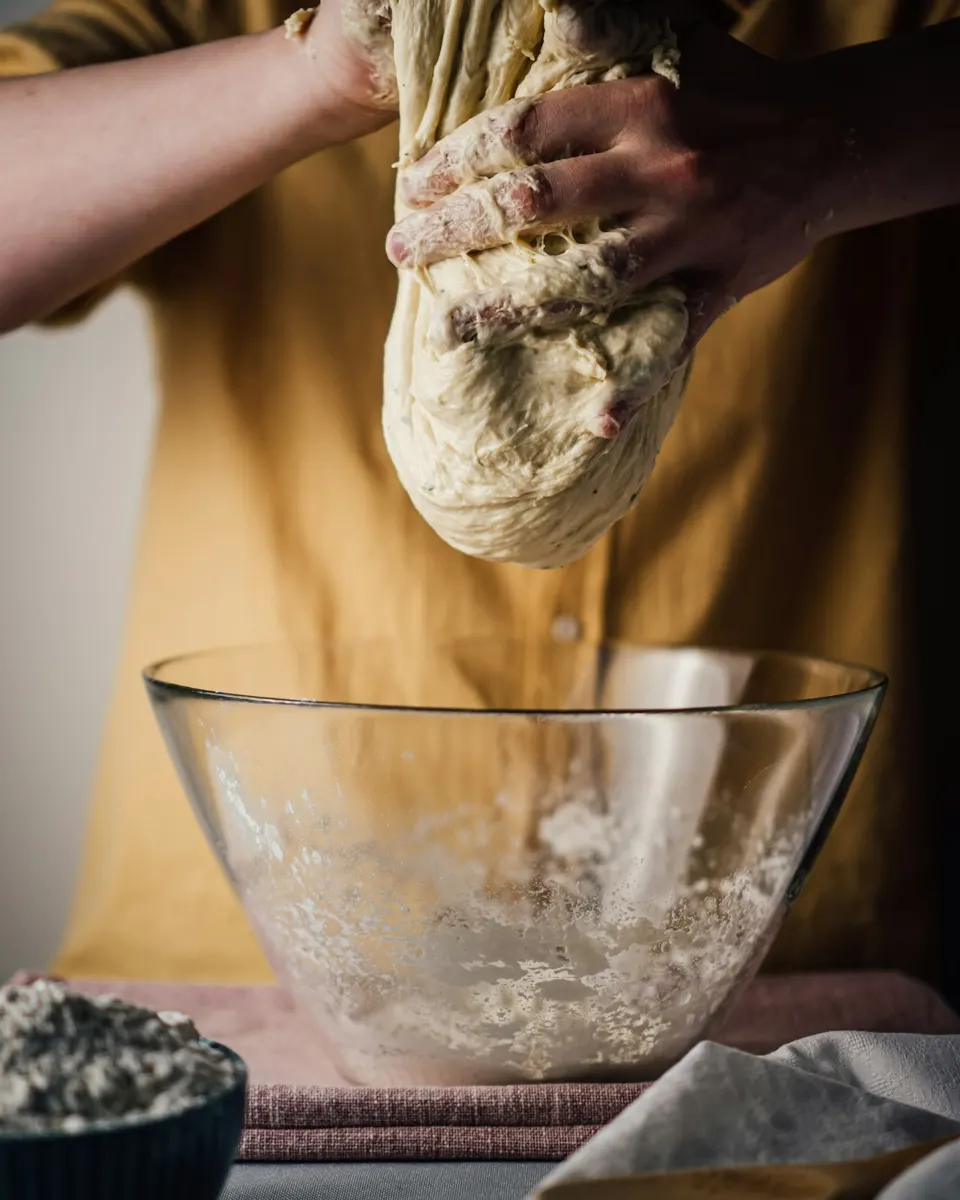
Wet your hand, grab one side of the dough, stretch it up until it resists and fold it over the top. Turn the bowl a quarter and repeat four times. Do three sets, 30 minutes apart. After the last set the dough should be smooth, elastic and hold a loose round shape.
4. Let it ferment
Leave the dough covered for about 30 minutes more, until it is roughly doubled, domed and shows bubbles on the surface and sides of the bowl. In a cool kitchen this can take an extra hour.
5. Transfer to an oiled pan
Pour the pan oil into a 23 × 33 cm (9 × 13 in) metal pan. Tip the dough in, turn it once so both sides are oiled, and gently ease it towards the corners. If it shrinks back, rest it 10 minutes and stretch again — never force it.
6. Final rise
Cover and let it rise for about an hour, until the dough fills the pan, looks puffy and wobbles when you shake the pan. Heat the oven to 230 °C (450 °F) during the last 30 minutes.
7. Dimple and top
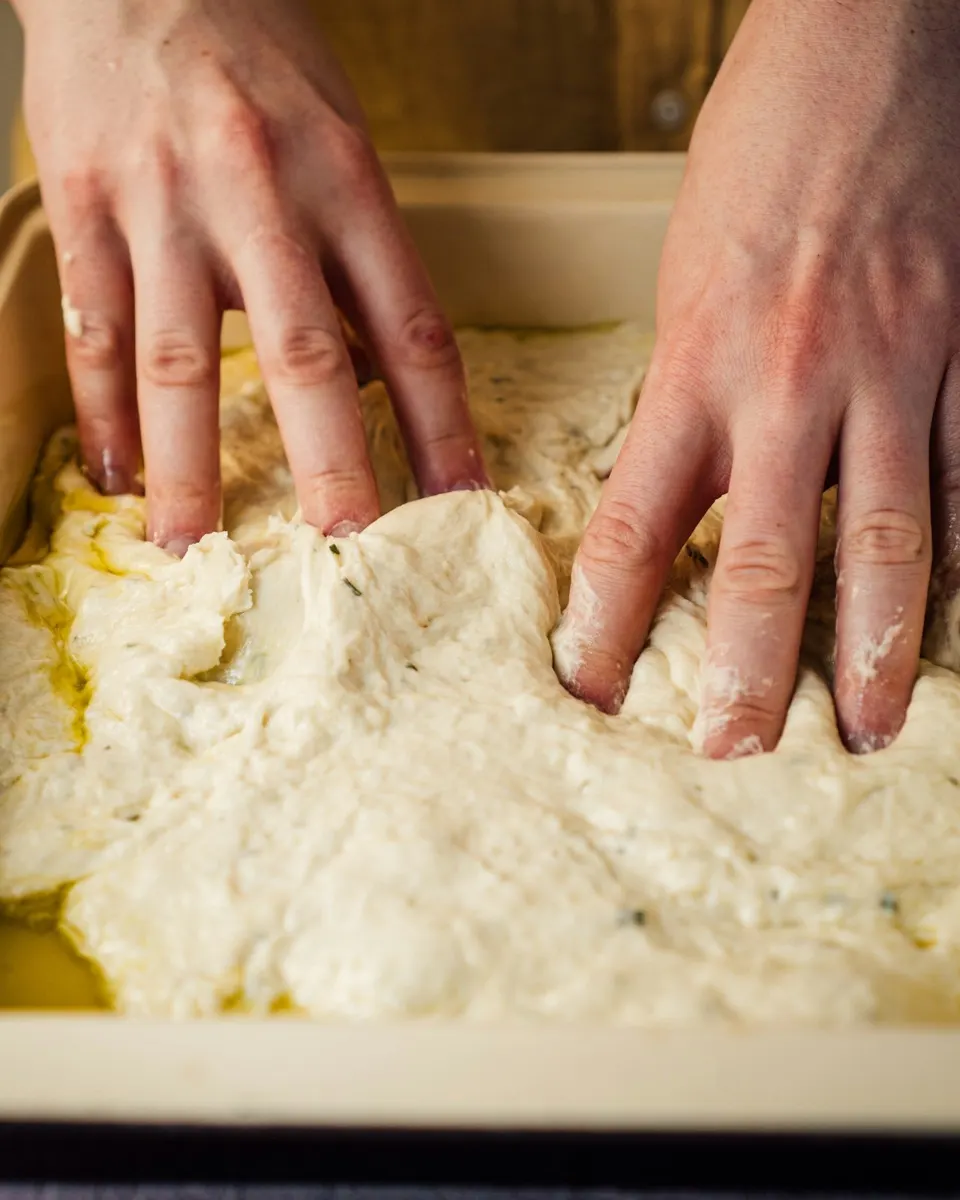
Oil your fingertips and press firmly all over the dough, right down to the bottom of the pan. The dimples should stay deep. Drizzle the top oil, scatter rosemary and finish with flaky salt.
8. Bake
Bake on a lower rack for 22–25 minutes, until the top is deep golden and the edges are crisp and slightly darker. A pale focaccia will be soft and bland, so do not pull it too early.
9. Cool before slicing
Lift the bread out onto a wire rack straight away so the base stays crisp, and wait at least 15 minutes. The crumb is still setting as it cools; cutting too soon makes it gummy.
Tips for perfect focaccia
- Airy crumb — keep the dough wet, fold rather than knead, and handle it gently in the pan so you do not knock out the gas.
- Sticky dough — wet or oiled hands, never extra flour. A bench scraper helps if you work on the counter.
- Fermentation time — temperature matters more than the clock. At 20 °C allow the longer end of every range.
- Ready dough — puffy, jiggly, bubbly and filling the pan. A gentle fingertip poke springs back slowly.
- Crispy bottom — metal pan, plenty of oil, lower rack, fully preheated oven.
- Olive oil — be generous. 40 g in the pan looks like a lot; it is what makes the edges crunchy.
- Avoid underbaking — aim for deep golden. If the top colours before the base, move the pan lower.
Common focaccia mistakes
- Dense — under-risen dough or too much flour. Wait for the dough to double and keep your hands wet instead.
- Dry — too little oil or overbaking at too low a temperature. Use the full oil amount and bake hot and fast.
- Pale — oven not fully preheated or pulled early. Preheat 30 minutes and bake to deep golden.
- Gummy — sliced while hot, or underbaked in the centre. Cool at least 15 minutes; add a few minutes to the bake.
- Did not rise — cold room, old yeast, or water that was too hot. Check the yeast date and use water that feels just warm.
Focaccia topping ideas
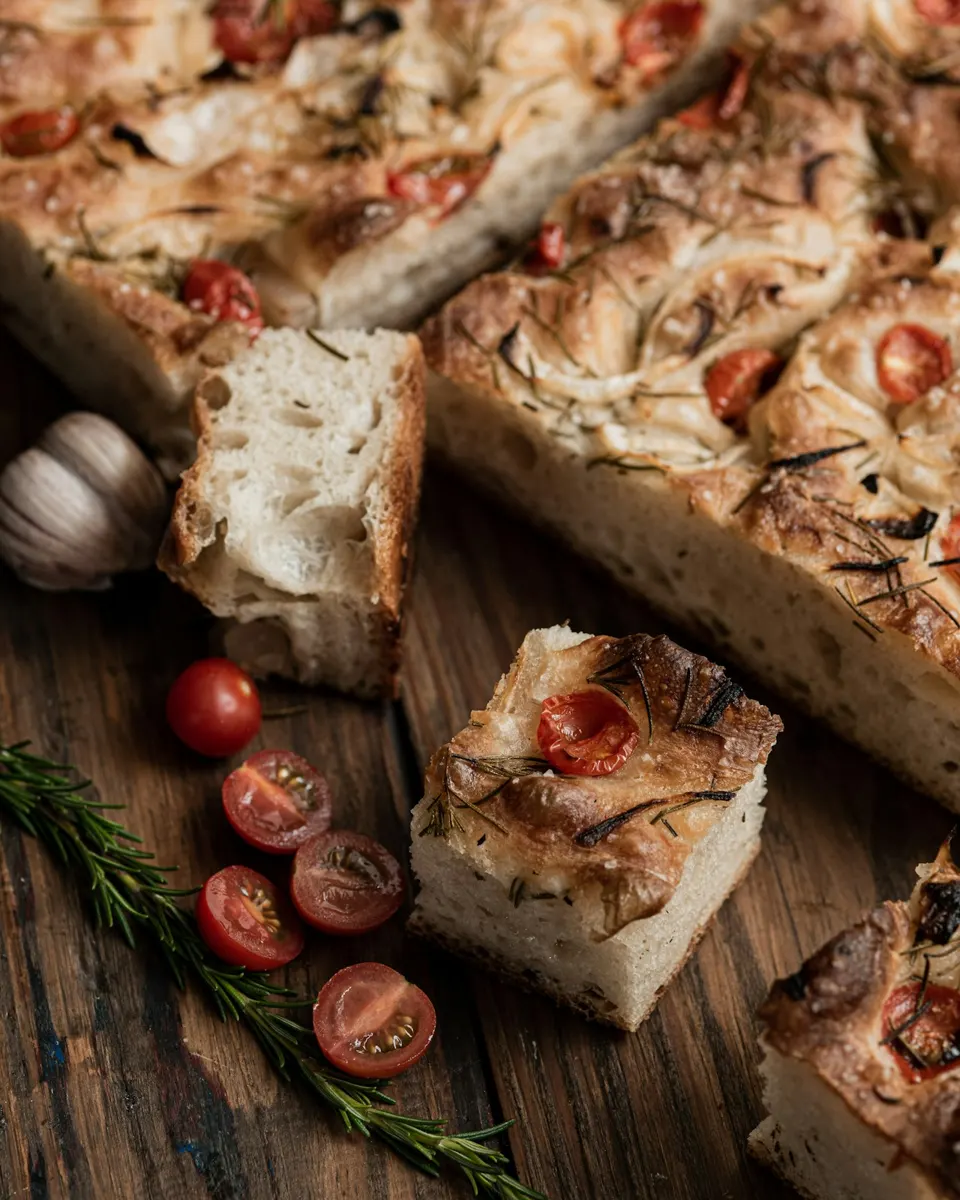
- Rosemary and sea salt — the classic.
- Cherry tomatoes — halved, cut side up, pressed into the dimples.
- Olives — pitted green or black, pressed in deeply so they do not burn.
- Roasted garlic — whole cloves tucked in before baking.
- Thinly sliced red onion with oregano.
- Thin potato slices and rosemary, Apulian style.
Wet toppings such as tomatoes release water as they bake, which can leave soggy patches. Use them sparingly, place them cut side up, and give the focaccia a few extra minutes in the oven.
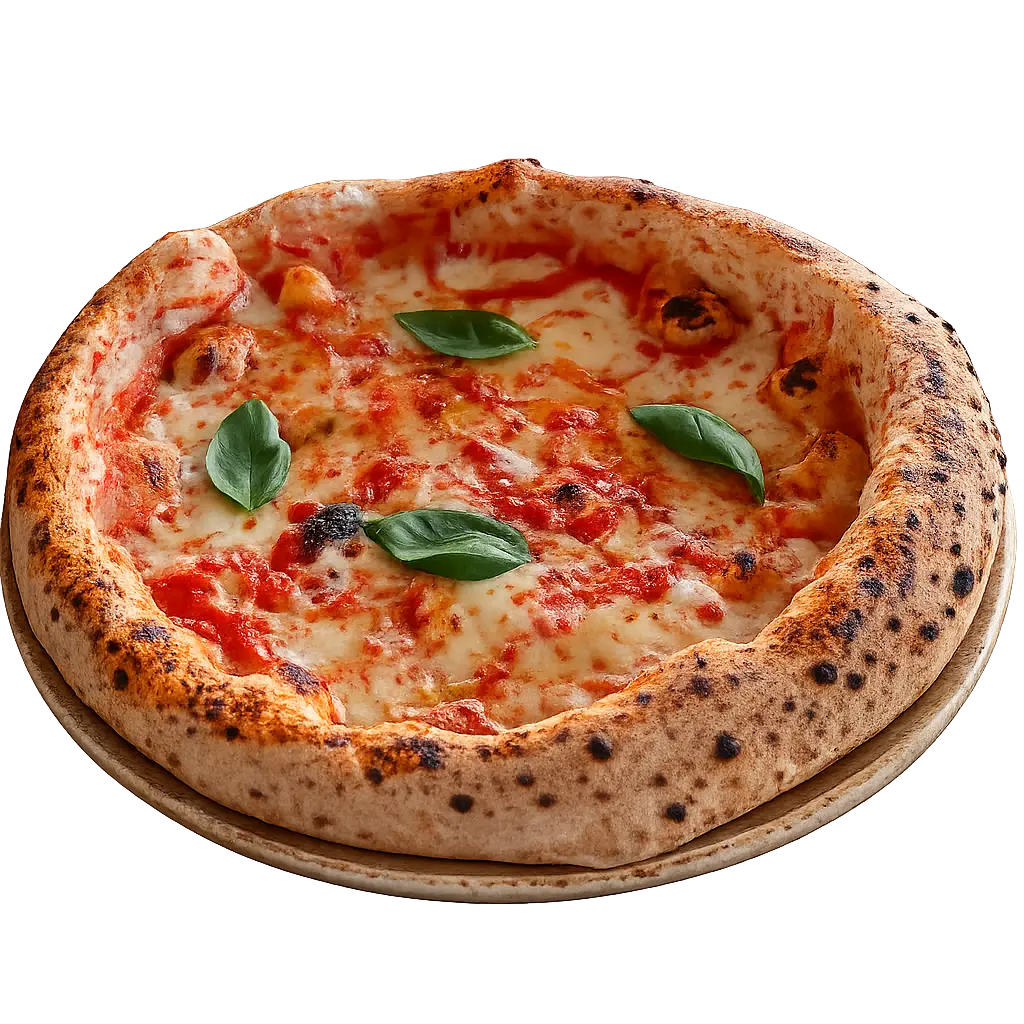
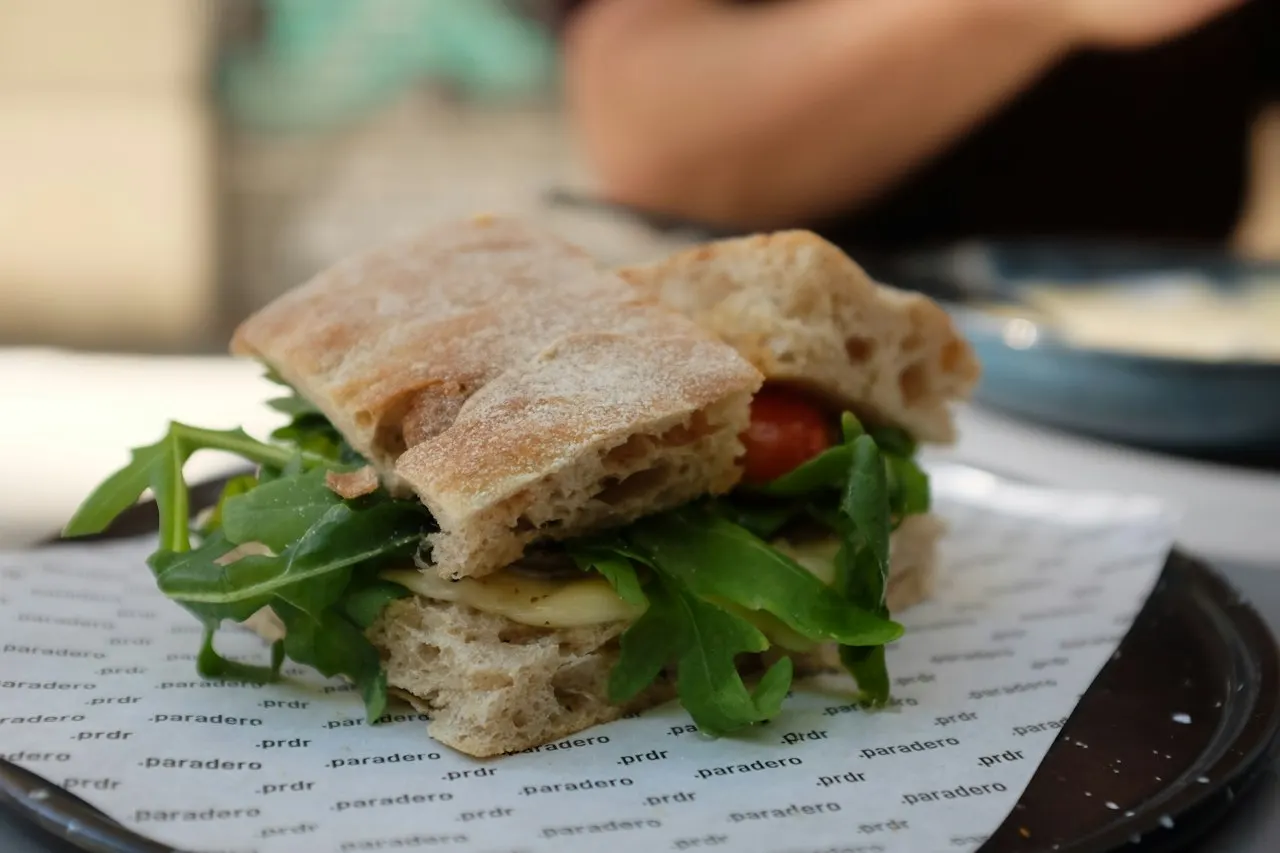
Focaccia is also a great companion to pizza night. Bake it in the same session as your homemade pizza, or split it for sandwiches.
How to store and reheat focaccia
Store: once completely cool, wrap in foil or keep in an airtight container at room temperature for up to 2 days. Avoid the fridge, which stales bread faster.
Reheat: warm pieces in a 200 °C (400 °F) oven for 5–8 minutes, or in a dry pan with a lid, to bring back the crisp base.
Freeze and thaw: freeze wrapped pieces for up to 2 months. Thaw at room temperature, then reheat as above.
Frequently asked questions
Is focaccia difficult to make?
No. It is one of the easiest breads for beginners: there is no kneading and no shaping. You mix a wet dough, fold it a few times, press it into an oiled pan and bake. Most of the time is hands-off waiting.
Can I make focaccia without a stand mixer?
Yes. This recipe is designed for a bowl, a spoon and your hands. The stretch-and-folds do the work a mixer would, building strength gradually while the dough rests.
Why is my focaccia dough sticky?
Because it should be. Focaccia dough is high-hydration — 80% water to flour here — and that water is what makes the crumb open and soft. Wet or oil your hands instead of adding flour, which makes the bread denser.
How long should focaccia dough rise?
About 2 hours in the bowl (including folds) and 1 more hour in the pan at a warm room temperature. Go by appearance: the dough should be roughly doubled, puffy and full of visible bubbles. A cold kitchen can take noticeably longer.
What flour is best for focaccia?
Bread flour or a strong 00 flour with around 12–13% protein. It holds the water and gas needed for big bubbles. All-purpose flour works, but the dough will be slacker and the crumb a little tighter.
Why is my focaccia dense?
Usually under-fermentation: the dough was baked before it had risen enough, or the kitchen was cold. Too much flour added during handling and pressing out the gas when stretching into the pan are the other common causes.
How do I get a crispy focaccia bottom?
Use a generous layer of olive oil in a metal pan, bake on a lower rack in a fully preheated oven, and do not underbake. If the top is done but the base is pale, slide the focaccia out of the pan onto the rack for the last 3–5 minutes.
Can I make focaccia dough the day before?
Yes. After the stretch-and-folds, cover the bowl and refrigerate for 12–24 hours. Cold fermentation deepens the flavour. Next day, tip it into the oiled pan and allow 2–3 hours for it to warm up and rise before dimpling.
Can focaccia be frozen?
Yes. Cool completely, cut into pieces, wrap well and freeze for up to 2 months. Thaw at room temperature and refresh in a 200 °C (400 °F) oven for 5–8 minutes.
Recipe card
Homemade Rosemary Focaccia
An easy, no-knead focaccia with a crisp olive-oil base and airy crumb. Makes 1 pan (23 × 33 cm / 9 × 13 in), about 12 pieces.
- Prep
- 20 min
- Rise
- 3 hr
- Bake
- 25 min
- Total
- 3 hr 45 min
Dough
Pan & topping
Instructions
- 1.Stir the yeast into the lukewarm water. Add the flour and mix until no dry flour remains, then add the salt and 15 g olive oil and squeeze it through. The dough will be very sticky.
- 2.Cover and rest for 30 minutes.
- 3.With wet hands, do a set of stretch-and-folds: lift one side of the dough, stretch it up and fold it over, turn the bowl and repeat 4 times. Repeat 3 sets, 30 minutes apart (about 1½ hours in total).
- 4.Leave the dough covered until it has roughly doubled and is bubbly, about 30 minutes more.
- 5.Pour 40 g olive oil into a 23 × 33 cm (9 × 13 in) pan. Tip the dough in, turn it once to coat, and gently stretch it towards the corners. If it springs back, wait 10 minutes and try again.
- 6.Cover and let it rise for about 1 hour, until puffy, jiggly and filling the pan. Preheat the oven to 230 °C (450 °F) during the last 30 minutes.
- 7.Oil your fingers and press deep dimples all over, right down to the pan. Drizzle with 15 g olive oil, scatter the rosemary and the flaky salt.
- 8.Bake on a lower rack for 22–25 minutes, until deep golden on top and crisp underneath.
- 9.Lift out of the pan onto a rack and cool for at least 15 minutes before slicing.
Love working with wet dough? Try Neapolitan pizza next
The Secrets of Pizza eBook takes the same skills — hydration, fermentation and gentle handling — into authentic Neapolitan pizza, step by step, for wood-fired and home ovens.
Get the Secrets of Pizza Guide — $29.99